Extreme Heat Is a Crisis Hiding in Plain Sight
Extreme Heat Is a Crisis Hiding in Plain Sight
Extreme heat is the leading weather-related cause of death in the United States, and many people underestimate how dangerous a hot day can become for someone without safe shelter or access to air conditioning.
Heat does not always look as dramatic as other disasters like hurricanes, tornadoes, and floods. Heat builds quietly. It can turn ordinary moments into serious health emergencies, especially when someone has no safe place to cool down.
Additionally, the Centers for Disease Control and Prevention (CDC) says people age 65 and older are more prone to heat-related health problems. People with chronic conditions, including heart disease and poor circulation, may also face greater risk during periods of extreme heat.
The National Oceanic and Atmospheric Administration (NOAA) and the Environmental Protection Agency (EPA) both identify extreme heat as a major public health danger, with heat causing more weather-related deaths in the U.S. than many better-known disasters.
That is why heat relief is not just seasonal support. It is a life-saving response.
Why Extreme Heat Is So Dangerous
Extreme heat can overwhelm the body’s ability to cool itself. When that happens, heat exhaustion or heat stroke can develop quickly.
The risk increases when high temperatures last for several days or when nights stay hot, leaving people with little chance to recover.
Heat does not have to look dramatic to become dangerous. A hot apartment, a long walk in the sun, or a day without access to water can become a serious health risk.
Why Some People Face Greater Risk
Many people can stay safe by going indoors, turning on the air conditioner, or driving to a cooler place.
Others do not have those options.
A family struggling with utility bills may not be able to keep the air conditioning running. A person experiencing homelessness may have nowhere to escape the sun. An older adult living alone may not realize how quickly the heat has become dangerous.
During extreme heat, the difference between safety and crisis can be a cool room, a bottle of water, a ride, or a wellness check.
How The Salvation Army Helps During Extreme Heat
The Salvation Army responds to extreme heat through locally operated programs designed around community needs.
Depending on the location, services may include cooling centers, hydration support, and direct outreach to people who are especially at risk.
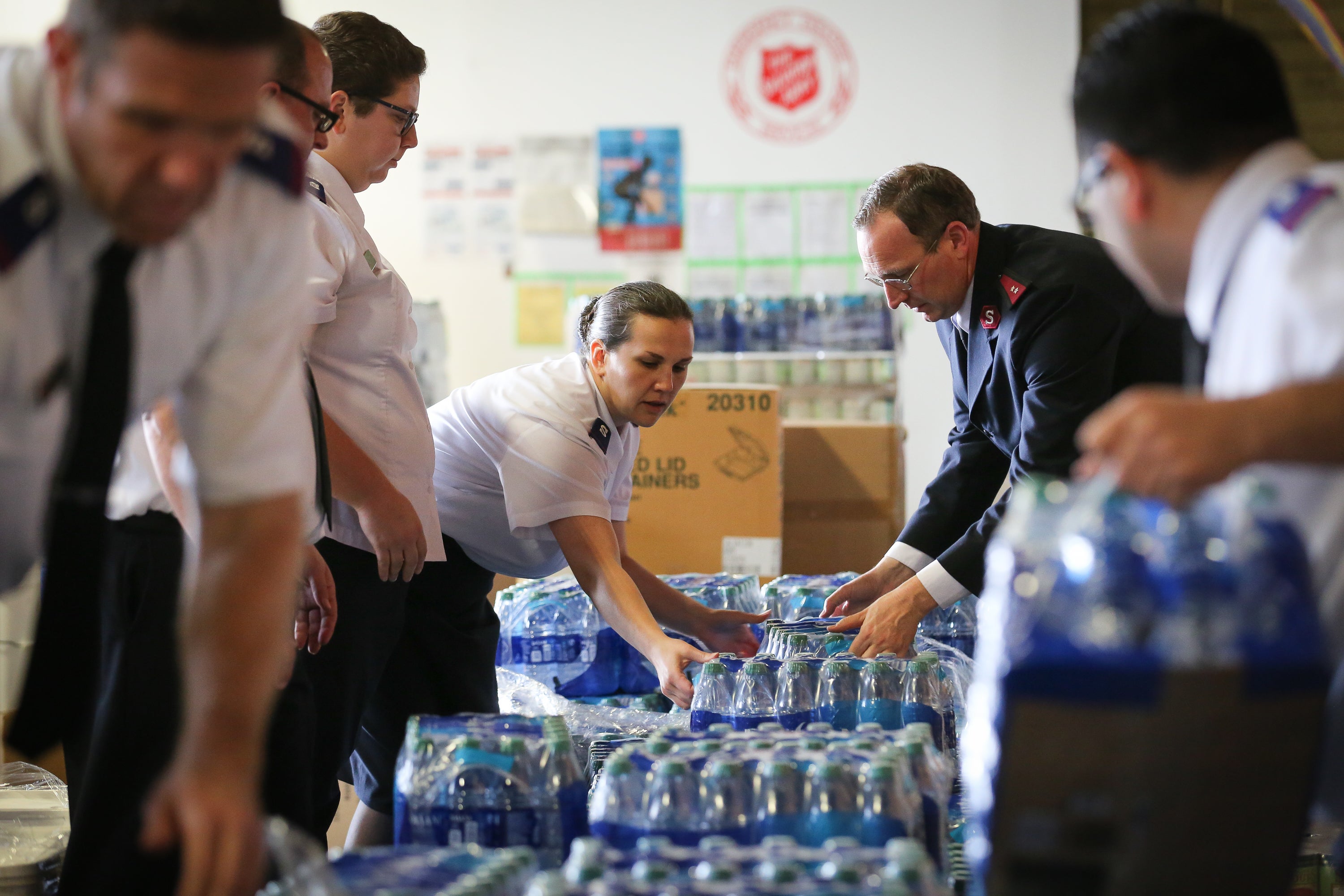
Some Salvation Army locations provide air-conditioned spaces where people can rest safely during the hottest parts of the day. Others distribute water, electrolyte drinks, fans, cooling towels, sunscreen, hats, or other heat relief supplies.
In some communities, teams conduct wellness checks for older adults or people living alone. In others, The Salvation Army works with local governments, emergency response partners, and community organizations to connect people with shelter, transportation, utility assistance, or other urgent support.
Local Help for Local Conditions
Heat affects every community differently.
Urban neighborhoods may hold heat longer because of pavement and buildings. Rural communities may have fewer nearby cooling options. People without stable housing may need direct outreach before they can access help.
That is why The Salvation Army’s heat relief work varies by location.
The goal is the same everywhere: help people stay safe when temperatures become dangerous.
Heat Relief Can Prevent Emergencies
A bottle of water can help prevent dehydration.
A cooling center can help someone recover before heat illness becomes severe.
A wellness check can identify a person in distress before the situation becomes a medical emergency.
These acts may seem simple, but during dangerous heat, simple support can save lives.
How Donations Help
Support from donors helps The Salvation Army respond when communities face urgent needs, including dangerous summer temperatures.
Because services vary by location, donations support the broader mission of helping neighbors in need. That mission may include heat relief, emergency shelter, food assistance, utility support, disaster response, and other local services.
No One Should Face Dangerous Heat Alone
Extreme heat may not receive the same attention as other disasters, but it can be even more deadly.
The Salvation Army helps provide relief, support, and hope for people facing dangerous conditions during the hottest months of the year.
Helping people survive extreme heat is not just about weather. It is about protecting people’s lives and making sure no one is left to face dangerous conditions alone.
FAQ
Why is extreme heat so dangerous?
Extreme heat can overwhelm the body’s ability to cool itself. When that happens, heat exhaustion or heat stroke can develop quickly. The danger increases when someone does not have access to shade, water, air conditioning, or a safe place to cool down.
Is extreme heat really one of the deadliest weather-related dangers?
Yes. The National Oceanic and Atmospheric Administration (NOAA) identifies extreme heat as the leading cause of weather-related deaths in the United States. The Environmental Protection Agency (EPA) also identifies heat as the leading weather-related cause of death in the U.S.
Who is most at risk during extreme heat?
People aged 65 and older, people with chronic health conditions, people experiencing homelessness, outdoor workers, young children, and families struggling with utility costs may face greater danger during extreme heat.
How does The Salvation Army help during extreme heat?
The Salvation Army’s heat relief services vary by location. Depending on local needs, services may include cooling centers, hydration support, and outreach to people who are especially at risk.
Does The Salvation Army offer cooling centers?
Some Salvation Army locations provide air-conditioned spaces where people can rest safely during periods of dangerous heat. Services vary by community, so people should contact their local Salvation Army to learn what is available nearby.
Does The Salvation Army provide water during heat waves?
Some Salvation Army locations distribute water, electrolyte drinks, or other heat relief supplies during extreme heat. Availability depends on local programs, resources, and community needs.
Why do people need help during hot weather?
Staying safe during extreme heat often depends on having access to air conditioning, transportation, water, and safe shelter. People without those supports may face serious health risks when temperatures become dangerous.
How can I help people facing extreme heat?
You can donate to The Salvation Army, check on neighbors who may be at risk, and share local cooling resources when dangerous heat is expected. Donations help support The Salvation Army’s broader work serving neighbors in need, including during periods of extreme heat.
Does my donation go only to heat relief?
Donations help support The Salvation Army’s broader mission of serving neighbors in need. Depending on the community, that work may include heat relief, emergency shelter, food assistance, utility support, disaster response, and other local services.