Heart to God, Hand to Man

How The Salvation Army helps people find hope and joy in local communities across Alabama, Louisiana, and Mississippi
“While women weep, as they do now, I’ll fight; while little children go hungry, as they do now, I’ll fight; while men go to prison, in and out, in and out, as they do now, I’ll fight; while there is a drunkard left, while there is a poor lost girl upon the streets, while there remains one dark soul without the light of God, I’ll fight. I’ll fight to the very end!” – General William Booth
In 1865, William and Catherine Booth began a ministry in London’s East End, determined to meet the poverty, hunger, and hardship of London’s streets where it lived. They preached the gospel, but also understood that telling someone about the hope of Jesus meant little if they were still hungry, without a home, or facing the night alone. Creating The Christian Mission, they strove to reach beyond the pulpit and into the streets, where human need was immediate and impossible to separate from spiritual need.
This conviction became the foundation of The Salvation Army: a heart to God, and a hand to man.
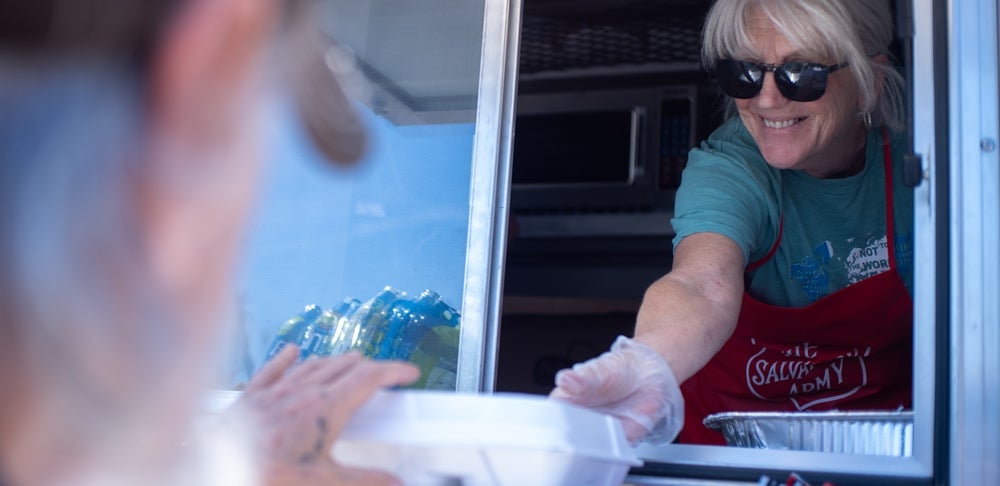
More than 150 years later, that mission has traveled far beyond the streets of England. The Salvation Army now serves in more than 130 countries, but its work still begins in much the same place: with the person in front of us and the need in front of them.
Across Alabama, Louisiana, and Mississippi, those needs can take many different forms. In one community, that may mean a safe place to sleep. In another, it may mean food for a family, help keeping the lights on, a path toward permanent housing, or a prayer in the middle of a crisis. Sometimes, it means all of those things at once.
So how does that century-old mission come to life in the face of twenty-first-century struggles?
A Safe Night
A warm bed and a roof over our heads is, sometimes, a need we take for granted.
For someone experiencing homelessness, an emergency shelter can mean more than a bed. It can mean a door that locks, a meal, a shower, a place to rest, and a few hours without having to wonder what the night will hold. Where shelter services are available, The Salvation Army can also help connect individuals with additional resources to address the circumstances that brought them through the door. Because when tonight is uncertain, tomorrow can feel impossible to imagine.
A safe night gives someone a place to begin.
Room to Rebuild
A warm place to rest your head can make a difference, but to rebuild a life, it takes longer than one night. For people who need more time and support, transitional housing and long-term shelter programs can provide something crisis strips away: stability.
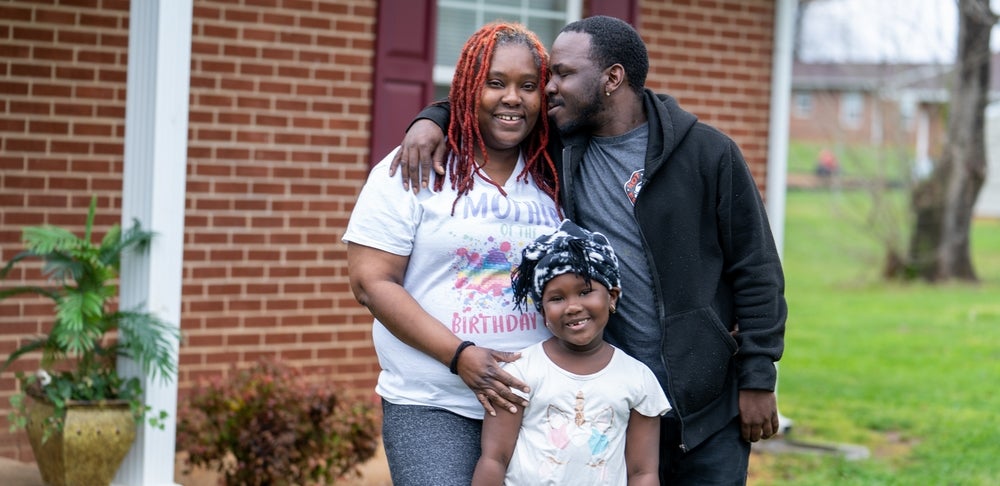
Across Alabama, Louisiana, and Mississippi, The Salvation Army’s housing services take different forms according to the needs and resources of each community. But wherever longer-term support is available, the goal reaches beyond simply having somewhere to stay. A consistent place to live creates room to address the circumstances that made stable housing difficult in the first place, without having to solve everything at once.
That foundation is only the beginning. Depending on the program and the needs of each individual or family, support can extend beyond a safe place to live to include case management and connections to resources that address employment, finances, education, transportation, and other barriers to stable housing. Residents can work toward permanent housing while also building the skills, resources, and confidence to maintain their independence.
There’s no single formula for rebuilding your life. One person may need help finding a steady job, while another may need help repairing their finances or securing a reliable ride to work. The most effective support recognizes those differences and helps each person work toward a future that is sustainable, not a solution that only lasts until the next crisis.
What Comes Next
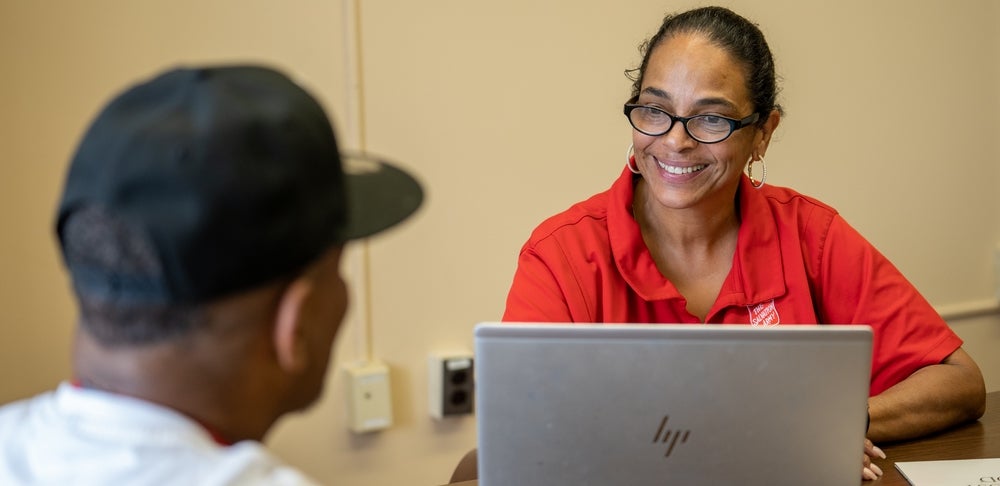
For individuals and families receiving case management services, The Salvation Army works alongside them to understand what needs to happen next to ensure success. For some, that’s finding permanent housing. For others, it’s securing steady work, applying for benefits, and learning skills that keep them on a path toward independence.
The work is personal because each problem is personal. There isn’t a checklist that can account for every circumstance, and there isn’t a single path toward a better future. Case managers are trained to listen, help prioritize what each individual needs to attend to first, and work with them to turn complicated situations into manageable steps.
And sometimes, the most important step is simply knowing that someone is willing to walk through that process with you.
A Way Forward
For families facing persistent hardships on their way to stability, Pathway of Hope takes the longer route.
Through Pathway of Hope, The Salvation Army works alongside families in Alabama, Louisiana, and Mississippi that are ready to break through the barriers that can keep one generation after another caught in cycles of hardship. Families identify goals, build practical plans, and take measurable steps toward a future that looks different from their past.
Housing might be part of that picture, so might emergency financial assistance, employment courses, educational resources (especially for the little ones), or even connections to legal aid.
What makes the journey different is that the family isn’t handed a list of solutions and sent on their way. The work is collaborative. Families sit down together, recognize the obstacles in their path, and even celebrate their progress along the way.
Pathway of Hope is about more than getting a family through today. It’s about helping them imagine, and work toward, a different tomorrow.
A Little More to Go Around
Life can force difficult choices: pay the electric bill or fill up the car with gas? Have a full meal or buy the winter coat my kid desperately needs? A need today or a need tomorrow?
Especially around the holidays, these choices can sting a little sharper. Families already stretching every dollar may have little left for a holiday meal, let alone the traditions that make the season feel special. All across Alabama, Louisiana, and Mississippi, Salvation Army food pantries and grocery assistance programs help fill that gap, providing food for families and individuals when their resources fall short.
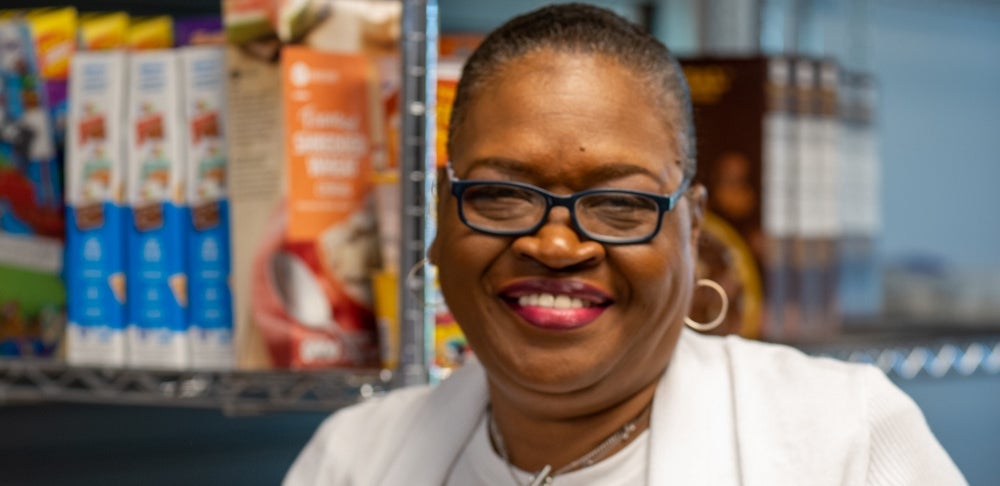
The help may be groceries to carry a household through the next several days or food that helps make a holiday meal possible. It’s a little more to go around when there isn’t enough.
But not everyone can make it to the pantry.
Food Beyond Four Walls
A food pantry can only help those who can get to it.
Transportation can be unreliable. Someone may not have a working kitchen or the means to prepare a meal. A neighbor could be experiencing homelessness, or a disaster could suddenly displace hundreds.
That’s why The Salvation Army’s fight against food scarcity and hunger doesn’t end at the pantry door. Through hot meal programs, community feeding, and other forms of food assistance, meals can reach people in different circumstances and different places. When disaster strikes, mobile kitchens can take meals, hydration, and essential supplies directly into affected communities.
The meal matters. So does the person sitting across the table. A shared meal can create space for fellowship, support, and connection to additional resources that can help someone take another step toward stability.
When the Bill Comes Due
Keeping a household afloat can come down to a handful of variables: rent, the electric bill, groceries, gas, or water. When one number changes, the others have to move with it. So, which do you choose?
A missed paycheck, an unexpected expense, or a higher-than-usual bill can leave a family choosing which necessity has to wait. The Salvation Army’s emergency financial assistance program helps relieve these issues in several ways. Through rent or utility assistance, the crisis can be held back before a temporary issue becomes the threat of eviction or service shutoff.
The immediate help matters, but so does what it protects: a family’s home and their most basic needs. For a family already stretched thin, a little help at the right moment can make all the difference.
More Than What We Can See
A person can have a place to sleep and still be hurting. A family can have food on the table and still be carrying uncertainty, fear, or grief.
Our founder understood that human need goes beyond the physical. His mission for The Salvation Army was born from the conviction that the gospel of Jesus Christ had to reach the whole person. That conviction remains at the heart of The Salvation Army’s work today.
Spiritual care gives people space for the things that a meal can’t fix. Whether it’s a prayer in your hospital room, a conversation after a loss, or encouragement in the middle of your worst day. This is where “a heart to God, and a hand to man” finds its footing. Practical service meets the need at our front door when the soul is taken care of just the same as the physical body of an individual. Faith reaches deeper, offering hope, presence, and love of God.
The Salvation Army doesn’t ask people to choose between physical help and spiritual care. The mission, however, has always made room for both.
When Everything Changes
A safe place to sleep, a hot meal, financial assistance, someone to walk alongside you in your darkest hour. These are all the things so many go without when disaster strikes in their community.
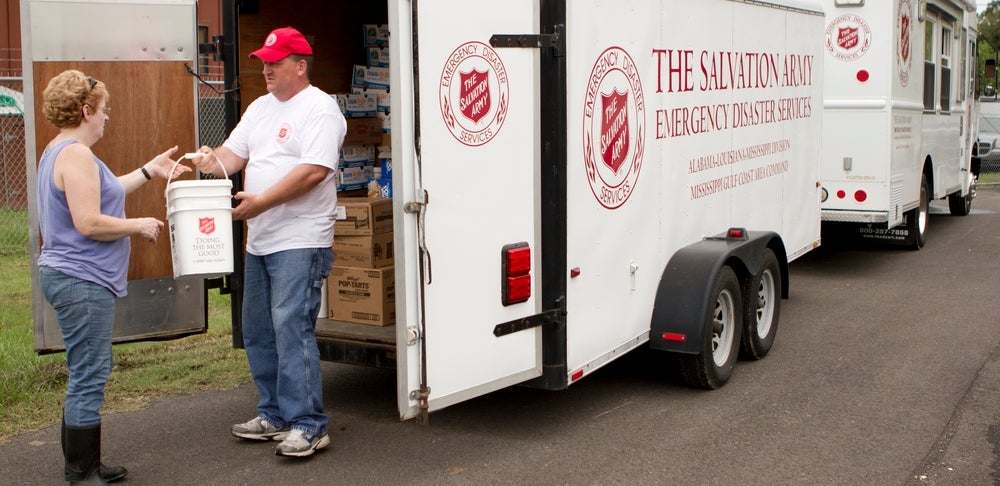
All across Alabama, Louisiana, and Mississippi, communities know how quickly that can happen. Hurricanes can reach the Gulf Coast. Tornadoes and severe storms can tear through communities. Flooding can force families from their homes. In a matter of hours, needs that once stood separately can suddenly exist all at once.
Emergency Disaster Services brings the breadth of The Salvation Army’s mission to the moments when our neighbors have lost so much. Food, water, essential supplies, and places of refuge can help meet immediate physical needs. Emotional and spiritual care offers support through the shock and uncertainty. As communities move from immediate response into recovery, The Salvation Army can remain alongside survivors as they begin navigating what comes next.
A disaster can change everything in a matter of hours. But recovery can take months or even years. Meeting need where it is means being ready for both.
A Place to Belong
At its core, The Salvation Army is a church. Our buildings are places where people gather not only in times of crisis, but week after week to worship, pray, study the Word of God, and grow together as a family in Christ.
The same mission that carries food into the disaster zone also opens the doors of the chapel on Sunday mornings.
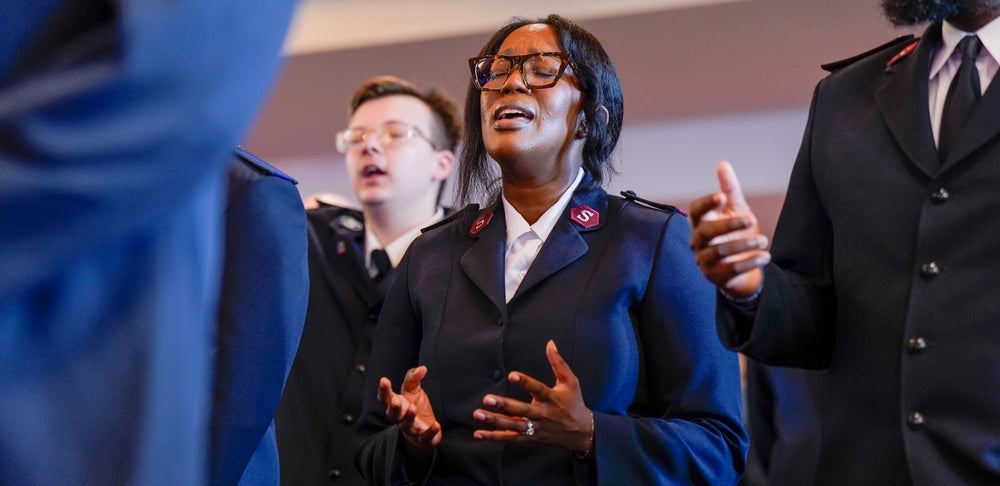
William and Catherine Booth believed the Gospel belonged wherever people were. The belief still shapes The Salvation Army’s churches found in communities all around the world. For some, it’s the church they have called home for years. For others, it’s the first place they walk through looking for God, for prayer, or simply for a community where they can belong.
The work doesn’t end when the crisis does. A meal can meet a need, but a church can become a home.
There is a Place to Start
The world General Booth encountered in 1865 doesn’t look exactly like the world we know today. The struggles have changed. The needs have multiplied. But the reason that drove William and Catherine Booth to serve in the street remains remarkably simple: people are worth fighting for.
The Salvation Army’s passion for people is what gives our mission its shape. It’s why faith doesn’t stop at the chapel door. It’s why a ministry can offer practical help in one moment and spiritual hope in the next. It’s why the response can look different from one person, one community, and one crisis to another, while still coming from the same place.
More than a century later, the invitation remains open.
Maybe you need help. Maybe you have something to give. Maybe you have time to serve, a gift to share, or a desire to find a church family you can call home. Whatever brings you here, there’s a place to start.