Preparing for natural disasters: EDS team participates in disaster exercise
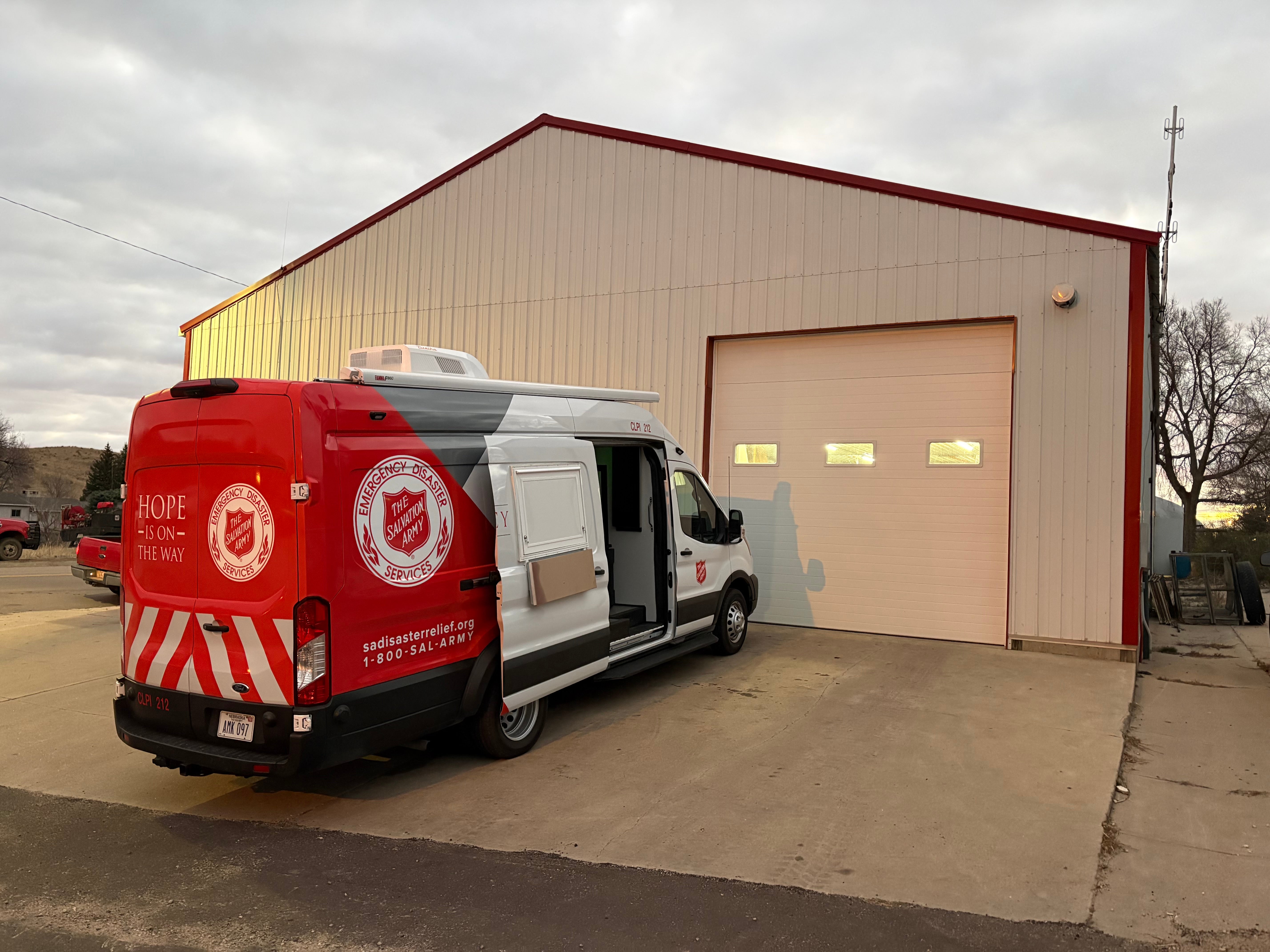
CAMP DOUGLAS, Wis.—Salvation Army staff tasked with responding to natural disasters got hands-on experience working with the military on such scenarios.
Members of The Salvation Army Western Division’s Emergency Disaster Services (EDS) team spent four days between Volk Field and Fort McCoy in Wisconsin in late August. They were tasked with feeding 1,000 Army and Air National Guard personnel from 35 different states as they conducted disaster exercises. It was part of the Patriot North 2026 exercise.
"This exercise was designed to mimic an actual disaster,” said Western Division EDS director Todd Connely. “The way it was presented to us is that a tornado came through two separate counties. The National Guard was dispatched to provide assistance because of this tornado, so some of the activities involved were not just feeding the military, but also the victims."
The scenarios featured not only search-and-rescue operations, but simulated riots, too.
"The volunteers were part of the military, and they were just actors that were playing the part of rioting," Connely said.
When disaster strikes in Nebraska, South Dakota or Iowa, the Western Division’s EDS team deploys there in large, van-like vehicles called canteens. These canteens are stocked with food, water, clothing, and blankets that EDS staff and volunteers provide to first responders and survivors.
During the exercise, Connely and his EDS team received requests for meals from either Fort McCoy or Volk Field.
In only a three-day span, Connely said the canteens drove around 300 miles between the two locations and delivered some 1,000 meals in total.
"Another group that was very important was our SATERN team,” he added. The SATERN team is a group of ham radio operators specific to The Salvation Army.
Cell-phone service degradation often happens in the wake of natural disasters.
"There are locations on Fort McCoy where even cell service was sketchy, so having a ham radio team was instrumental to the success of our operation. So we were able to communicate their location. They were able to give us instant feedback if there was a delay."
Connely said that because a SATERN operator was with his canteen, they were able to relay information back to EDS.
"If we did not have an exercise like this, it would leave us short-handed,” Connely said. “It would leave us trying to learn on the fly, it would leave us ill-prepared for a real-life disaster that comes around."