Upcycling workshops help turn secondhand finds into fresh creations
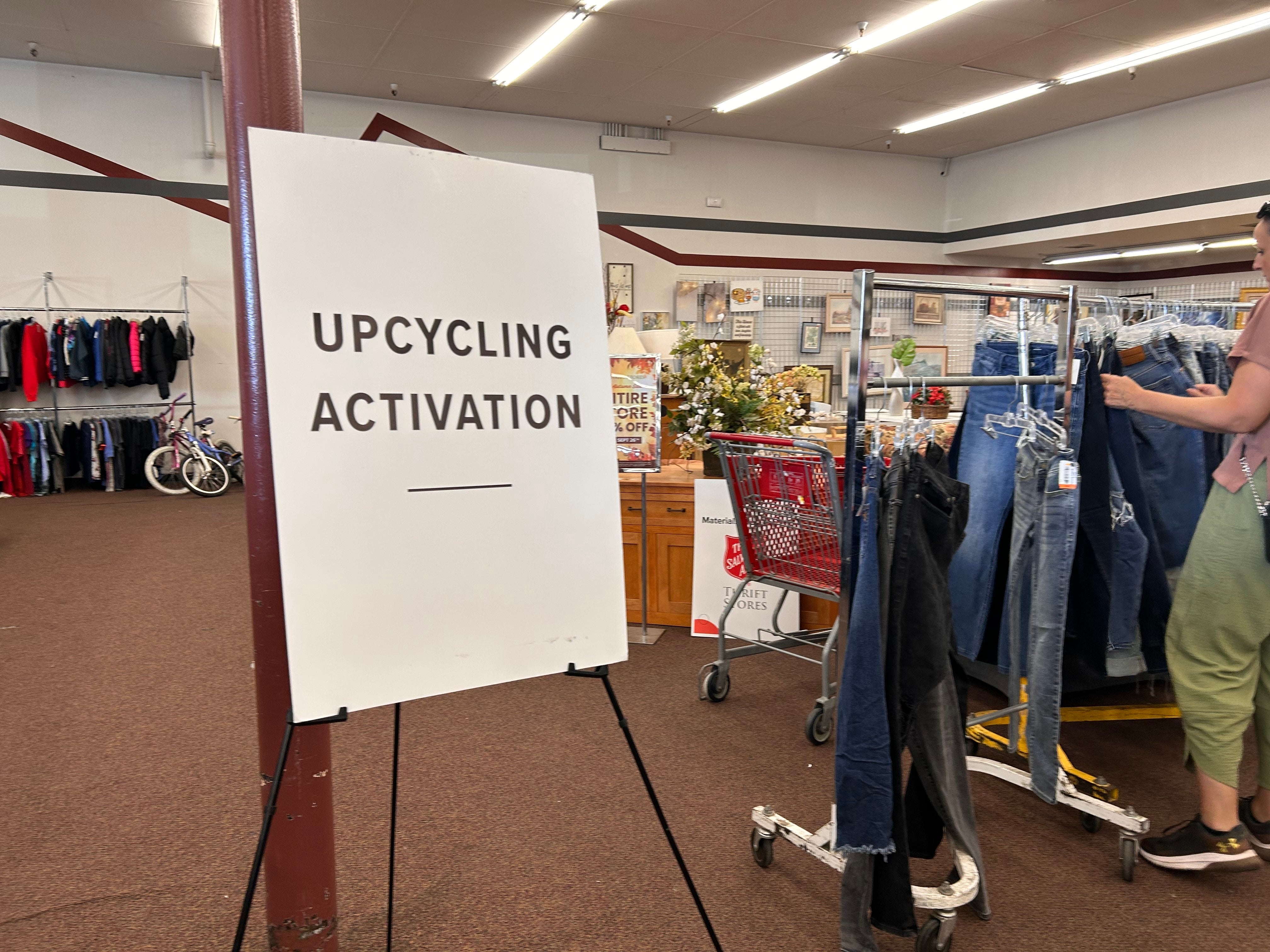
Across the West, The Salvation Army's thrift stores are hosting upcycling workshops to build community around sustainability.
From embroidering denim jackets to redesigning old shirts into trendy, one-of-a-kind pieces, upcycling is bringing a fresh approach to thrifted fashion.
As interest in sustainability and do-it-yourself clothing projects grows, hands-on workshops are making their way into thrift stores across the U.S., turning traditional shopping spaces into places where participants can experiment with new techniques, collaborate and learn.
The Salvation Army thrift stores across the West are joining the movement, offering free upcycling workshops and inviting the community to participate.
Western Territory Manager of Donations Development and Sustainability Bianca Nemtoc said the new workshops are designed to help shoppers see the potential in secondhand clothing and create a more interactive in-store experience.
“One of the broader goals is to encourage shoppers to look at clothing a little differently and explore creative ways to extend the life of pieces they already own,” Nemtoc said.
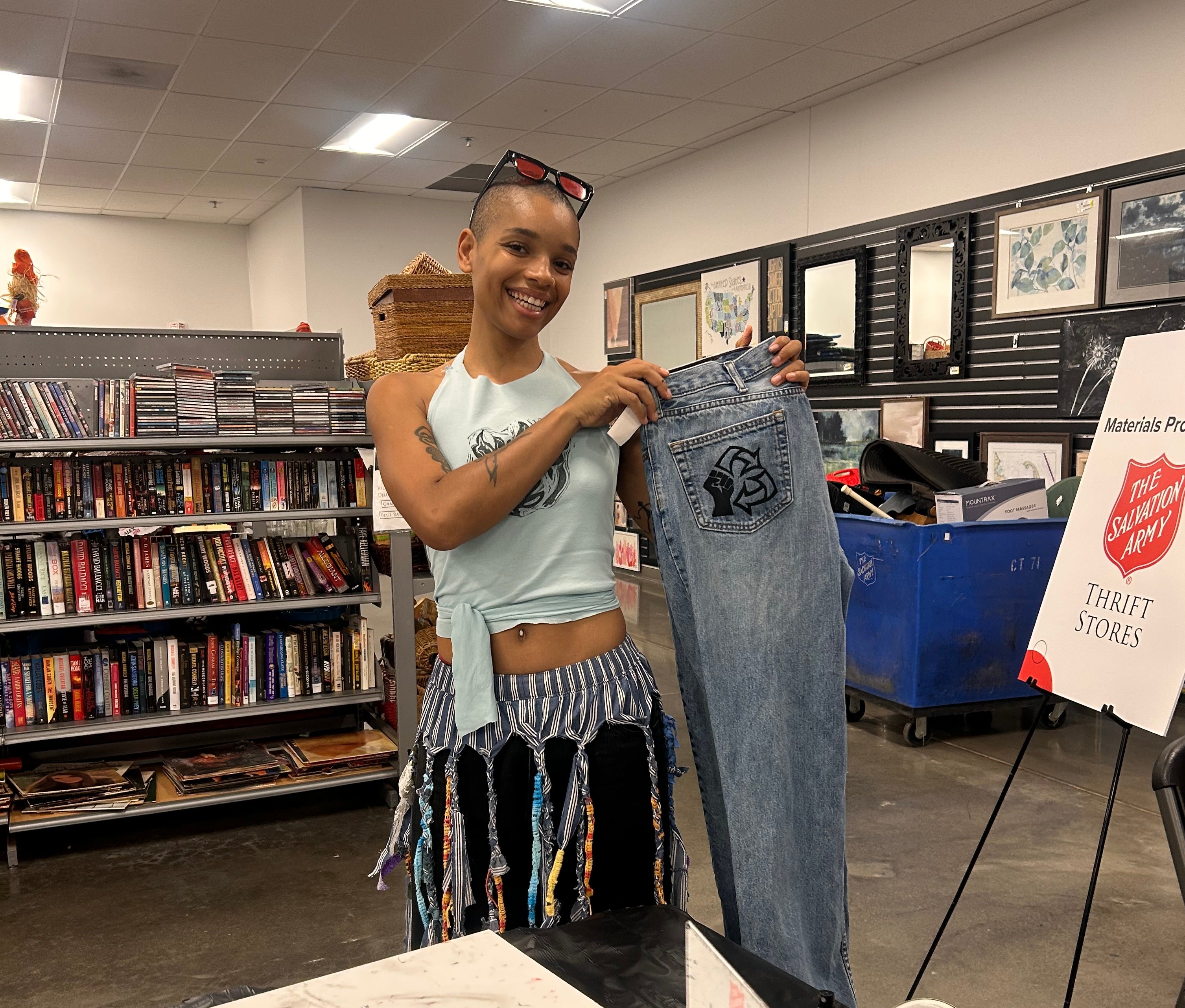
Arela Williams displays jeans featuring her block-printing design. Photo by Haley Osness.
The initiative kicked off Sept. 12 at The Salvation Army's South San Francisco Thrift Store, where participants explored different mending and knitting techniques. A second workshop followed Oct. 3 at the Otay Mesa Thrift Store in San Diego, this time introducing shoppers to block printing and fabric painting.
Each workshop is led by local fashion designers and upcyclers who share their expertise and guide participants through the process of transforming clothing.
“We want to collaborate with local artists to help host so participants can build those connections within their community,” Nemtoc said.
At the South San Francisco Thrift Store, Sarah Spiro, founder of upcycled fashion brand Sarah Sustainable, showcased her skills in creating one-of-a-kind apparel using upcycled materials.
Much like the pieces she sells through her brand, Spiro demonstrated how she uses braiding, patchwork, weaving and sashiko, a traditional Japanese hand-stitching technique, to create new clothing, jewelry and accessories.
“You don’t always need a fancy sewing machine or special equipment to design something fun and new,” Spiro said. “With a little guidance, people can discover what they’re capable of creating.”
During the workshop, Spiro and her daughter, Kate, showed some 20 participants how to cut discarded materials into strips and weave them into bracelets, belts and other accessories.
The Salvation Army provides clothing that hasn't sold in store, allowing participants to choose a piece, make it their own and take home their finished creation for free.
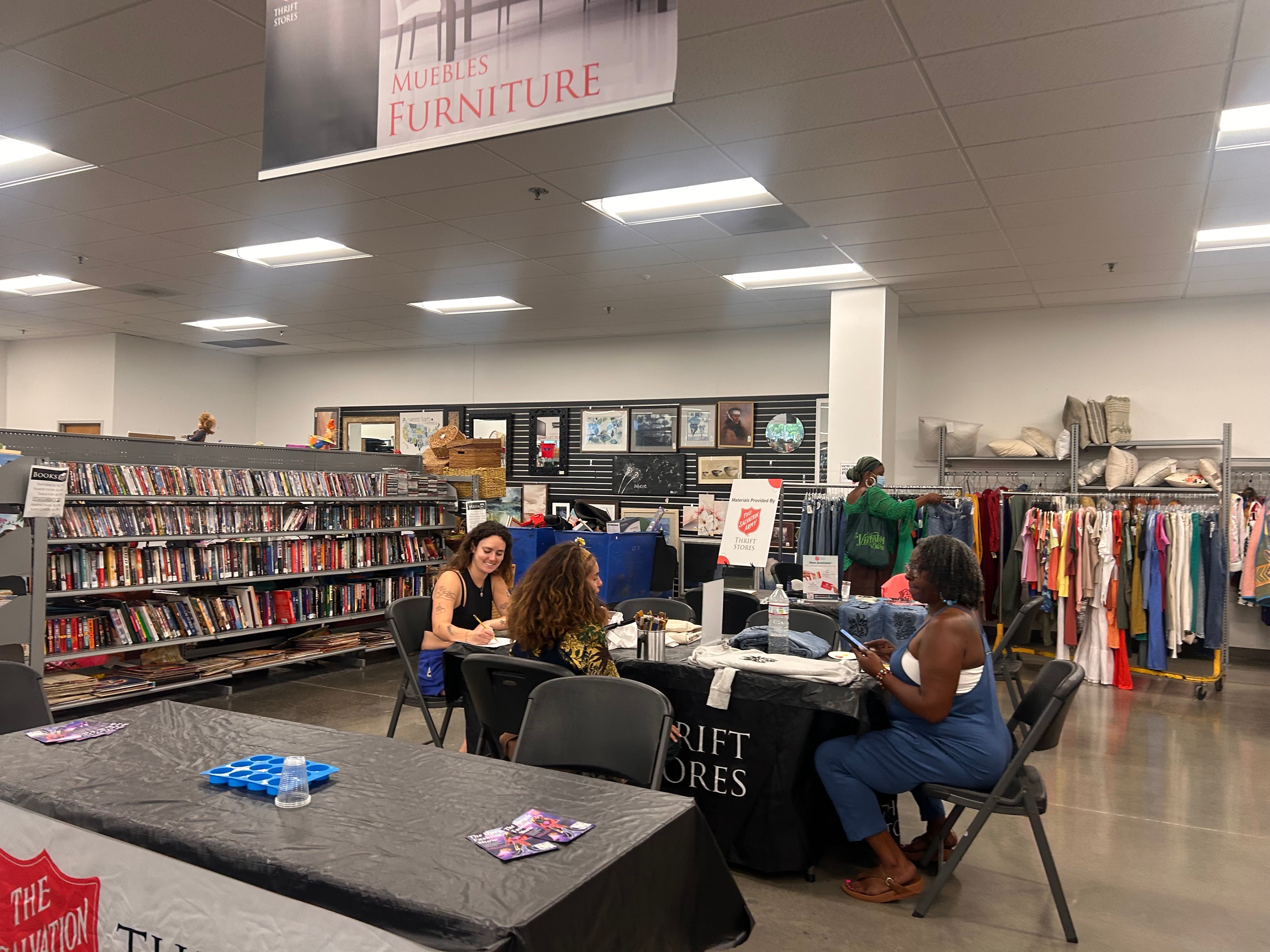
Daniela Loizart helps attendees paint designs onto clothing. Photo by Haley Osness.
Ruby Santore stopped by the South San Francisco thrift store to shop but found herself drawn to the workshop. After learning about sashiko, she practiced the hand-stitching technique on a pair of jeans she planned to give to her granddaughter.
“It’s always good to try something new,” Santore said. “I’m not an artist, so I never would have thought about doing something like this on my own.”
Beyond introducing shoppers to new skills, Nemtoc said the workshops also highlight how small changes in shopping and clothing habits can help reduce textile waste.
“We hope people see value in textiles that might otherwise go to waste and feel inspired to find creative ways to keep those materials in use,” Nemtoc said.
According to a July 2026 report from the National Institute of Standards and Technology (NIST), researchers estimate that 56 percent of clothing and textiles could be recycled or recovered, but most of that material ends up discarded instead.
That idea was put into practice at the Otay Mesa Thrift Store workshop, where The Salvation Army partnered with local creative collective The Upcycle Gathering to help shoppers personalize secondhand clothing.
Participants could choose from a rack of preselected clothing or find another piece in the store to customize. They then brought their selections to local fashion designer Arela Williams, who helped them stamp their clothing using carved blocks.
From there, attendees moved to workshop tables, where Daniela Loizart, artist, designer and founder of The Upcycle Gathering, guided them in adding color and personal touches with fabric paint.
For Loizart, the appeal of upcycling goes beyond changing how a piece of clothing looks.
“There are no limits when it comes to creating your own clothes,” Loizart said. “That’s what makes it such a cool and special experience. When redesigning clothing, you’re using your creativity and personal expression to make something that represents you.”
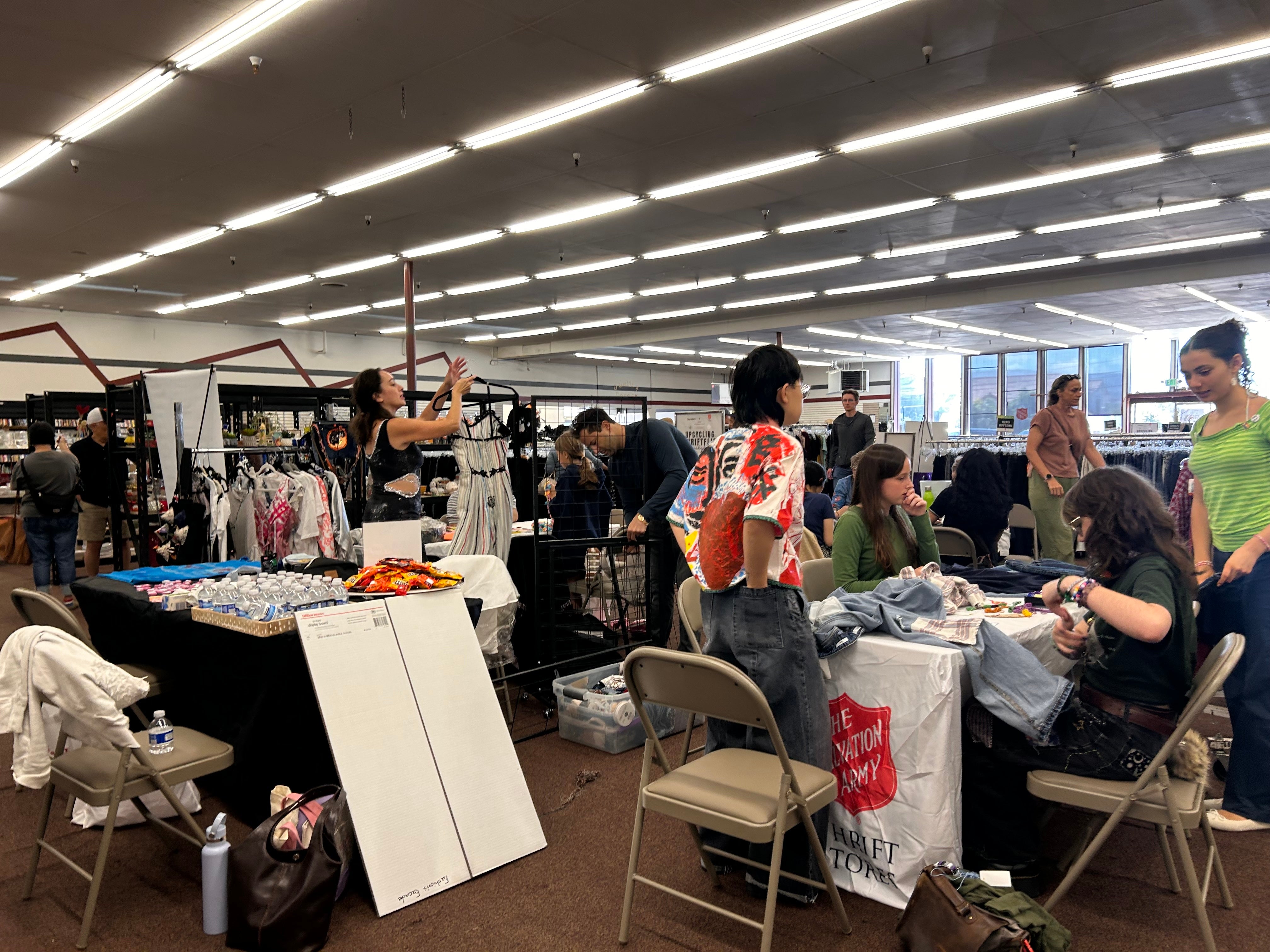 Shoppers and creatives gather for The Salvation Army South San Francisco Thrift Store upcycling event. Photo by Haley Osness.
When participant Ebony Robinson chose to stamp a hoodie with a face design created by Williams, she was initially hesitant to add her own touches.
“I’m new to this, and I don’t want to ruin it,” Robinson said.
With Loizart’s guidance, Robinson decided to add hair to the face, painting yellow sunflower petals to create the look. Seeing the finished design, she said she was glad she had stepped outside her comfort zone.
“I decided to just go for it and not worry too much about perfecting it,” Robinson said.
She added that one of her favorite aspects of the event was socializing in a relaxed environment alongside individuals with shared interests.
“I’ve been on the lookout for opportunities like this in the community to get out and meet new people,” she said, adding she joined the mailing list of The Upcycle Gathering to stay updated on local events.
For Nemtoc, the hope is that the workshops will be the beginning of more opportunities for shoppers to connect with local artists and discover new possibilities for secondhand clothing.
The Salvation Army plans to continue partnering with upcycling fashion designers to host workshops roughly once a month at different thrift stores across the West.
“Seeing people leave the workshops feeling inspired and excited to try something new on their own is exactly the outcome we hope to continue seeing,” Nemtoc said.