Twenty-five years after September 11, three Salvation Army responders remember Ground Zero
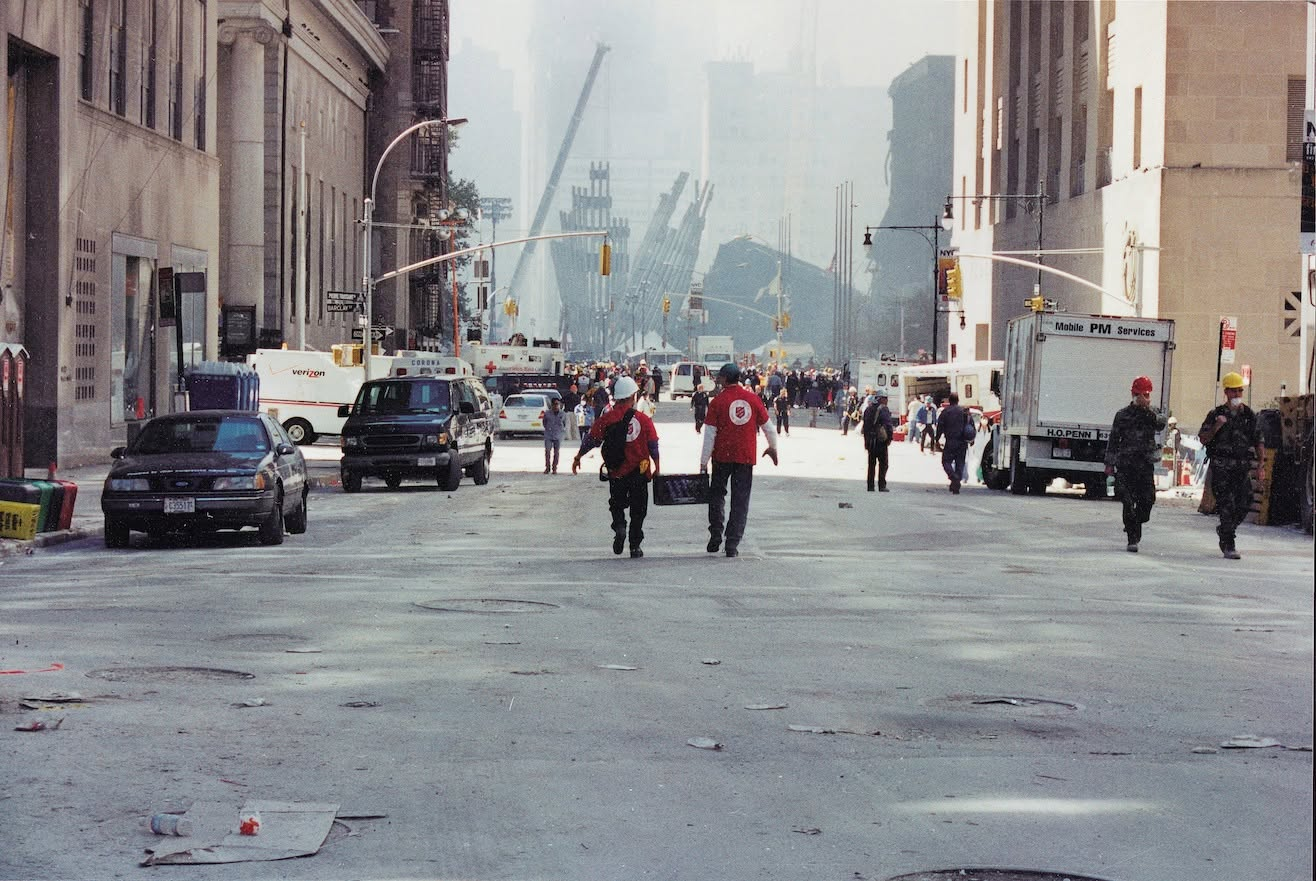
"We Felt Helpless. We Wanted to Do Something."
Twenty-five years later, some memories remain remarkably clear.
A bottle of water handed to an exhausted firefighter. A cup of coffee offered without many words. A hand placed on the shoulder of a man grieving the loss of his fellow firefighters.
For those who served with The Salvation Army following the September 11, 2001, terrorist attacks, these seemingly small moments have never really left them.
Like millions of Americans, Guy Bocicaut watched the events of that morning unfold with a sense of shock and helplessness.
"The Salvation Army office was close to where I worked in downtown Norwalk," Bocicaut recalled. "Because I work in real estate, I had gotten to know several people who were involved with The Salvation Army, and we had become friends."
When The Salvation Army began recruiting volunteers to respond at Ground Zero, he didn't hesitate.
"After 9/11, just like everybody else, we felt helpless, and we wanted to do something," he said. "As I was going to my office, I learned The Salvation Army was recruiting people to go down there, and I signed up."
The attacks occurred on a Tuesday. By the following morning, Bocicaut was leaving Norwalk at 8 a.m., headed for Lower Manhattan.
"The Salvation Army had a registration site not too far from Ground Zero," he said. "When we arrived, there were about 15 of us. At first, we were handing out water to firefighters who had come from all over the country."
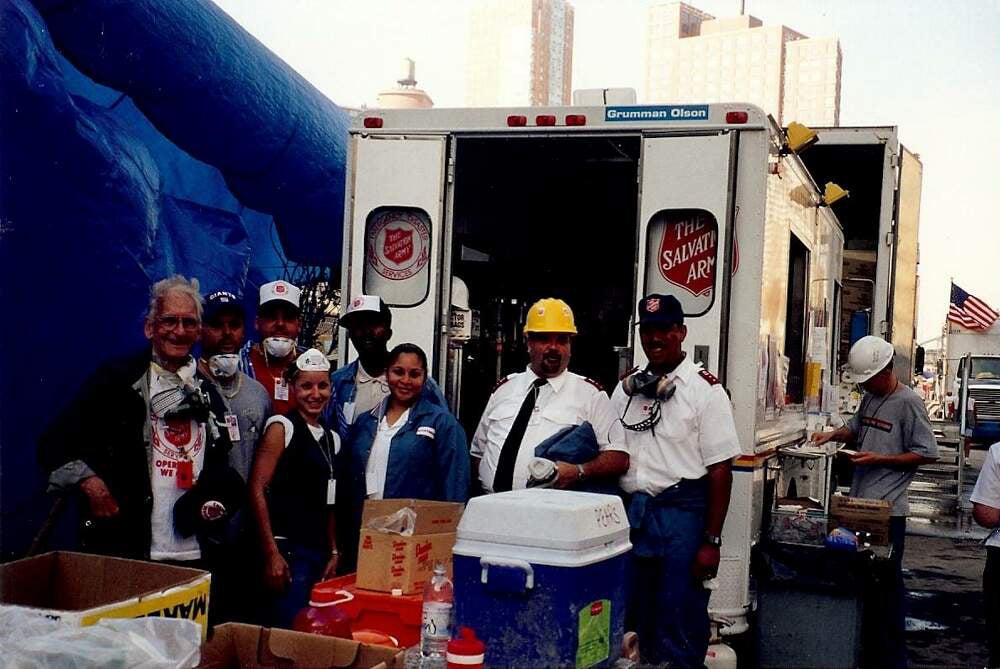
Major Kiley Williams, who today is the commanding officer of The Salvation Army in Newport, Rhode Island, remembers September 11 from The Salvation Army's College for Officer Training in Suffern, New York. That morning was supposed to mark the beginning of classes.
"We were walking from the dorms to the main building to start classes," Williams recalled. "When we got there, everybody was sitting in the lobby area watching the TVs. We all just gathered around and watched what was happening."
Classes were canceled. Almost immediately, Williams remembers The Salvation Army beginning to organize its response.
"They put out sign-up sheets right away for people to go in," Williams said. "They were putting teams together and saying, 'We're going to go.'"
Major Gilbert Parkhurst, commanding officer of the Danbury Salvation Army, who was serving with The Salvation Army in Pennsylvania at the time, would also make his way to New York.
The magnitude of what had happened became real as he approached Ground Zero.
"Prior to entering the tunnel, traffic was at a standstill," Parkhurst recalled. "As we came out the other side, the streets were devoid of traffic except for emergency personnel. That's when it really hit me."
At Ground Zero, Parkhurst distributed food and water to first responders. But it soon became clear that people needed more than something to eat or drink.
"As we brought food to those that we were serving, it was clear that people who were coming to the canteen truck just needed someone to listen to them," Parkhurst said.
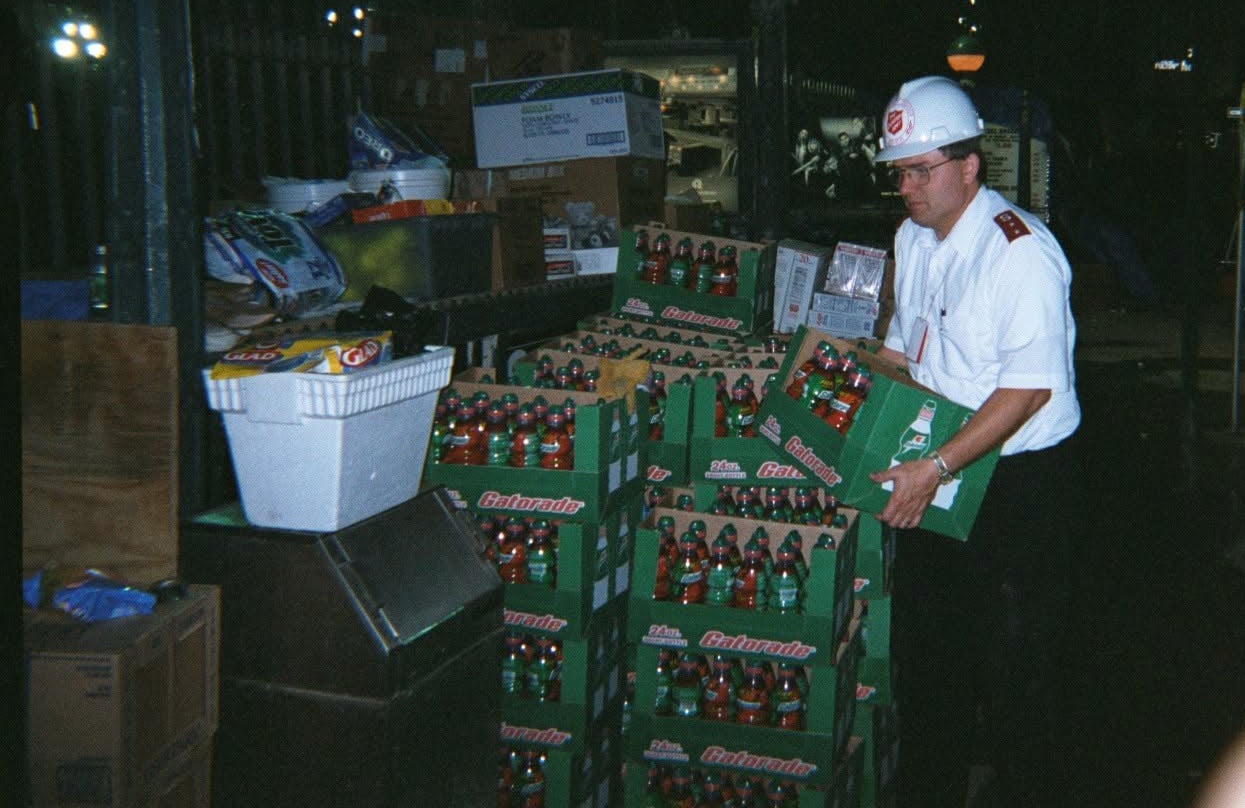
Williams remembers the atmosphere as solemn. In the midst of so much devastation, her role often came down to meeting the simplest needs of the people in front of her.
"It was really just, 'You want coffee? Here you go,'" she recalled.
It was a small gesture in the face of an enormous tragedy, but it was one way to serve.
For Bocicaut, the work quickly became more sobering.
"Part of our job was to bring body bags to the rescue workers," Bocicaut said. "They came on pallets, about 48 to a pallet, and we would move them to where they were needed."
Yet amid the devastation, he also witnessed extraordinary acts of kindness and unity.
"It was heartbreaking," he said. "But there was also something almost magical about how people came together. It's in times like this that you really see the spirit of America."
Emergency vehicles from across the nation filled the streets. Volunteers and first responders encouraged one another. Everyday citizens held handmade signs expressing their gratitude.
Bocicaut remembers one encounter above so many others.
"I handed a firefighter a bottle of water," he said. "He was this big, stocky guy, covered in tattoos, looked like a biker. He grabbed me and gave me a hug as if I had given him a billion dollars."
For Bocicaut, the embrace captured the humanity he saw throughout the response.
"There were so many people looking for ways to help," he said. "It was beautiful."
Parkhurst had his own unforgettable encounter with a firefighter.
"One evening, I came across a fireman that was kneeling and crying," Parkhurst recalled. "As I walked up to him, we began to talk. He shared that he had lost all of his men in the towers. I placed my hand on his shoulder and just let him talk."
There was nothing Parkhurst could say to change what had happened. What he could do was just listen.
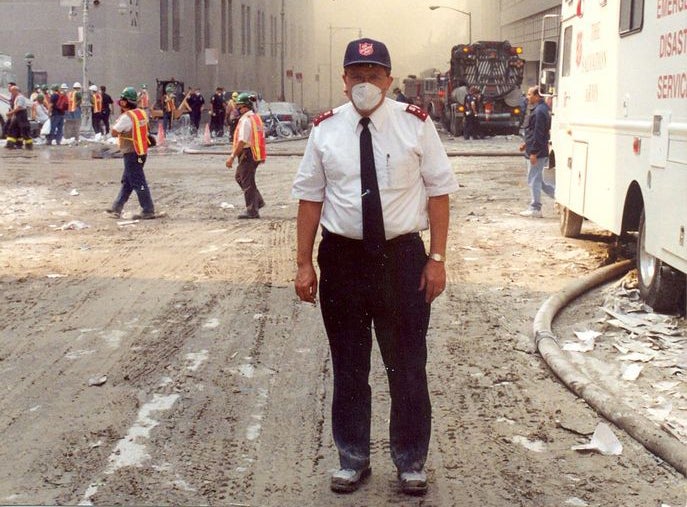
Twenty-five years later, Williams understands that kind of service differently than she did as a young woman responding to an unimaginable disaster.
"The Salvation Army is about servitude," Williams said. "You're not doing it to get anything in return. You're just being there for people. Maybe not necessarily to counsel them, but to listen and just be there."
For Bocicaut, Parkhurst and Williams, their experiences were different, but the mission was the same. Serve the person in front of you.
Sometimes that meant providing food or water. Sometimes it meant carrying supplies. Sometimes it was pouring a cup of coffee. Sometimes it meant listening.
And sometimes it simply meant staying beside someone who did not want to be alone.
Looking back, Bocicaut remains impressed by how The Salvation Army mobilized volunteers amid an unprecedented disaster.
"I can tell you, for a disaster of that magnitude, The Salvation Army's volunteer registration and recruitment process was flawless," he said. "When I went down there, I expected total chaos. Instead, everything was orderly. They knew exactly what they were doing."
For Williams, the passage of a quarter century is difficult to comprehend.
"Sometimes it feels like yesterday, and then other times it's like, has it really been that long?" she said.
Certain images remain with her. So does the way people responded to one another.
"With any disaster, people come together and people are supportive and helpful," Williams said. "It's sad that it can't be like that all the time."
Among the most powerful memories is another that Williams believes is worth carrying forward: people put themselves aside for one another.
"We're not here for me. We're here for everybody else," Williams said. "This is what we do. This is what God wants us to do all the time, to be supportive of one another."
Twenty-five years have passed since September 11, 2001.
The people who served at Ground Zero cannot forget what they saw. But they also remember what people did.
They showed up.
They carried what needed to be carried. They poured coffee. They handed out water. They listened. They offered a shoulder. They held onto strangers.
And when there was nothing anyone could do to undo what had happened, they simply stayed.