The Story of The Salvation Army Angel Tree
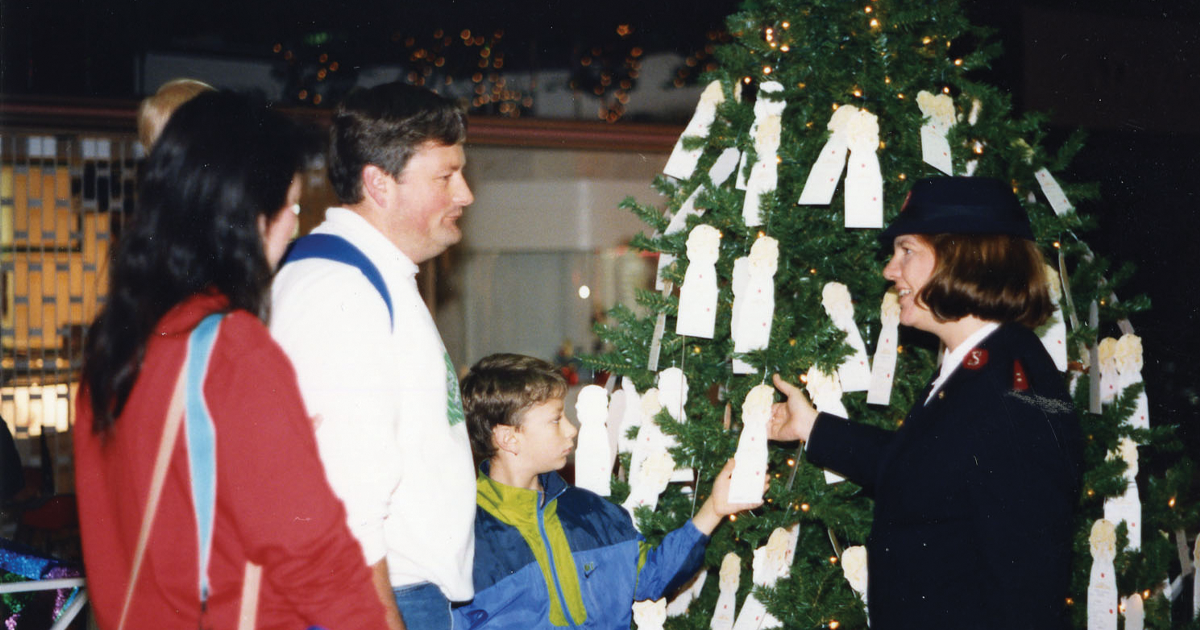
In 1979, in a small Virginia town, an idea was born.
It was new and innovative, and much like the Red Kettle, it has become a tangible way for people to share the meaning of Christmas in communities across the United States and even around the world.
In Lynchburg, VA, local Salvation Army officers Captains Charles and Shirley White approached a newly opened shopping mall, hoping to partner with them in the Christmas kettle effort. While they were unable to have kettles inside the mall, management offered their Christmas tree display to help in some way.
Looking back, Shirley White, who retired with the rank of Lt. Colonel, explains, “We thought about how children are given toys and useful items at Christmas through the Army’s toy program. We also thought about when they go back to school and see their friends in new clothes, and they don’t have any because their parents couldn’t afford to buy them for Christmas. We wanted to help with that. So, we took a walk through the mall and entered a Hallmark store. I spotted a Christmas card with three angels on the front. So, I said, ‘What if we cut these and make three Angels out of it, each with a child’s clothing size on the back and hang them on the tree.’”
That simple plan 47 years ago was met with an outpouring of support from residents of Lynchburg, who spread Christmas joy by providing 472 children with clothing. Since then, the Angel Tree Program has grown to help more than a million children and their families.
The next year, even more families were helped, and the community responded with more than clothes. They donated bicycles, toys and other items. In 1982, the Whites were sent to Nashville, TN, and proposed the Angel Tree to the Advisory Board. Board members were hesitant to start something new, but the Whites persisted, and soon radio station WSM co-sponsored the program. Colonel White says that from there, the program blossomed, with 10,000 Angels participating. Two TV spots introduced the Angel Tree to a wider audience and shortly after the idea became national. “It’s just letting the Lord lead you,” White says about the program’s success. Over the years, she has been deeply impressed by those who run the program in each community, by the spirit of giving and caring shown by those who adopt an Angel and by the appreciation expressed by the Angels themselves. “We’ve got tons of letters thanking us for all that was provided for their family. The Army came through and did it. It’s very gratifying.
“We learned from those we registered as Angels that they just wanted somebody to hear their story,” White continues, “that somebody cared about what was going on in their lives. It also gave volunteers an opportunity to meet with the people. It’s a reciprocal relationship, and not just about us giving somebody something, but a ministry for everybody involved. People wanted to do something for somebody. We gave them the logistics of how to do it.”
Read the Full Story of the origin of The Salvation Army's Angel Tree in The War Cry