The Justice Calling: The Hope of Justice
By Major Sandra Pawar /
“He will wipe every tear from their eyes. There will be no more death or mourning or crying or pain...” (Revelation 21:4).
I don’t know how you feel when you wake up in the morning and read the headlines, watch the news, or listen to the stories of people around you, but I know that I often find myself overwhelmed with sorrow. When I look at our world, I see war, poverty, human trafficking, displacement, racism, loneliness, and countless other forms of suffering. I meet people whose dignity has been diminished and whose voices have been ignored. At times, the scale of injustice in our world leaves me asking difficult questions: Is anything really changing? Will justice ever come?
Do you ever feel the same way?
Thankfully, Scripture does not ignore these questions. Instead, it points us toward hope.
The Christian story does not end with brokenness; it ends with restoration. Revelation 21 paints a beautiful picture of God’s future where He dwells with His people and makes all things new. Every wound will be healed, every injustice addressed, and every tear wiped away. The hope of justice is not wishful thinking or naïve optimism; it is grounded in the promises and character of God.
This hope is essential because the pursuit of justice can be difficult and exhausting. Those who stand alongside vulnerable people often encounter setbacks, resistance, and disappointment. Change rarely happens as quickly as we would like. Yet, Romans 8 reminds us that all creation is groaning as it waits for redemption. We live in the tension between what Christ has already accomplished and what He has promised to complete. We see glimpses of His Kingdom, but we still long for its fullness.
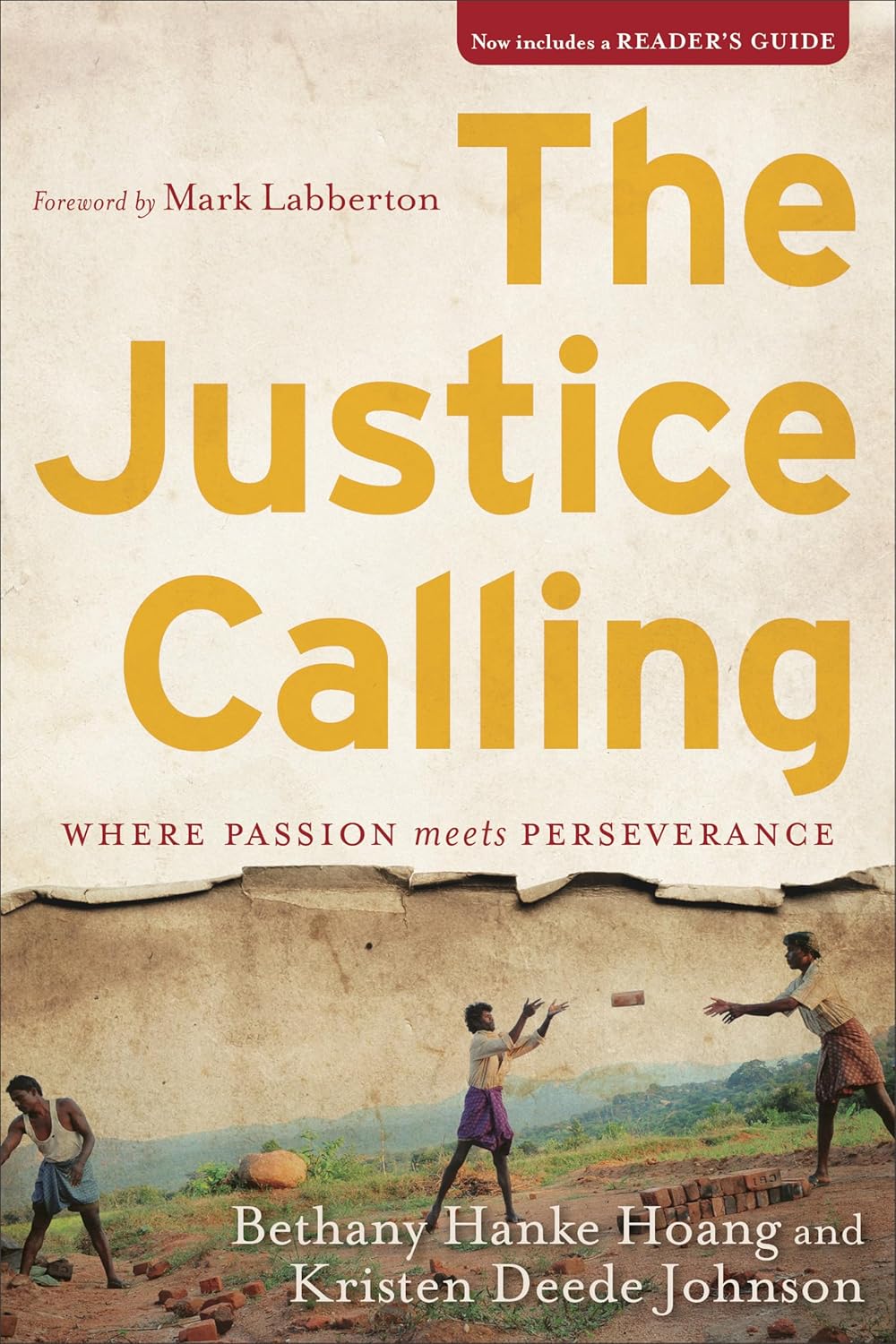
In “The Justice Calling,” Bethany Hanke Hoang reminds us that justice is not simply another ministry activity; justice flows from the very heart of God. We pursue justice because God is just. We seek restoration because God is restoring all things. Hoang challenges us to see justice not as an optional add-on to our faith, but as a natural expression of discipleship and worship.
This perspective changes how we respond to the brokenness around us. Rather than acting from guilt, frustration, or a sense that we must fix every problem ourselves, we act from hope. We recognize that the burden of redeeming the world does not rest on our shoulders. That work belongs to God. Our calling is to faithfully participate in what He is already doing.
And hope does not make us passive; biblical hope inspires action.
Because we believe God will one day establish perfect justice, we work for justice today. Because every person bears the image of God, we advocate for dignity, belonging, and compassion. Because we trust that God sees every act of faithfulness, we continue serving even when the results seem small.
Hope enables perseverance.
The volunteer who visits an isolated senior, the Salvationist who advocates for survivors of trafficking, the corps member who welcomes newcomers and refugees into community, the officer who faithfully serves a struggling neighborhood — these acts may never make headlines, but they are signs of God’s Kingdom breaking into the present world.
As followers of Jesus, we hold together present action and future hope. We work for justice because God’s Kingdom has already begun, and we persevere because we know His Kingdom will one day be fully realized. Every act of compassion, advocacy, hospitality, and mercy becomes a glimpse of the world to come.
One day, Christ will return and make all things right. Until then, we continue to pray, serve, speak, and love. Not because we are certain of immediate success, but because we are certain of God’s ultimate victory.
The hope of justice is this: God has not forgotten His creation. He has not abandoned those who suffer. He is making all things new.
And until that day comes, may we join in His work with courage, faith, perseverance, and hope.