Recovery Rooted in Faith: The ARC’s Mission to Restore Lives
By Joanna Norris /
 For men who walk through the doors of The Salvation Army’s Adult Rehabilitation Center (ARC), hope can feel like a distant memory. Addiction, homelessness, broken relationships, and years of hardship often leave them searching for a fresh start.
At the ARC in Jacksonville, that fresh start begins with more than recovery—it begins with faith, purpose, and the belief that lasting change is possible. Through spiritual guidance, life-skills training, work therapy and a supportive community, men are finding the tools they need to rebuild their lives and rediscover hope for the future.
One of those men is Danny Stanton, who was just 14 years old when addiction first took hold of his life. What began with crack cocaine led to decades of struggles, brokenness, and repeated attempts at recovery. Growing up without a father and spending time in foster care after getting into trouble as a juvenile, Danny often felt like he was navigating life on his own.
Today, after years of battling addiction and multiple stays in rehabilitation programs, he has found something different at the ARC: hope rooted in faith. Now two years clean, Danny credits the program's spiritual foundation, supportive community and second chances with helping him build a future he once thought was out of reach.
He says the most valuable part of the rehabilitation process for him has been the spiritual components he gets in the programs’ class courses. “This time around, I’m not just sitting in class waiting for time to go by, but I’m actually listening and taking notes,” said Stanton. “I’m more grateful because I see the opportunities that have been given to me.”
This is Stanton’s third time through the rehabilitation program and describes the ARC as “magical.”
“At this point, I realized that I needed to stay connected to the Lord and that I needed a spiritual advisor. Last time, I knew I needed a sponsor and I knew I needed to stay in church and I wasn’t very social. Now, I’m trying to build on that and not isolate myself,” he explained.
Majors Allen and Tasha Tanner oversee the ARC program, located at 10900 Beach Boulevard in Jacksonville, Florida. Tasha says the program is spiritually based at the heart. “It’s ministry at heart compounded with different elements to help service those who need our help. Statistically, we know that spiritual-based programs or individuals who seek spiritual integration meet with longer-term success.”
Program Director Bryant Stewart teaches classes to approximately 125 men on everything from Freedom in Christ to Denial and Anger Management and hopes they walk away from the program believing in themselves. “A lot of these guys come in here and they’re broken down and don’t have any hope,” he stated. “A storm is going to come, and we want them to know they can get through it.”
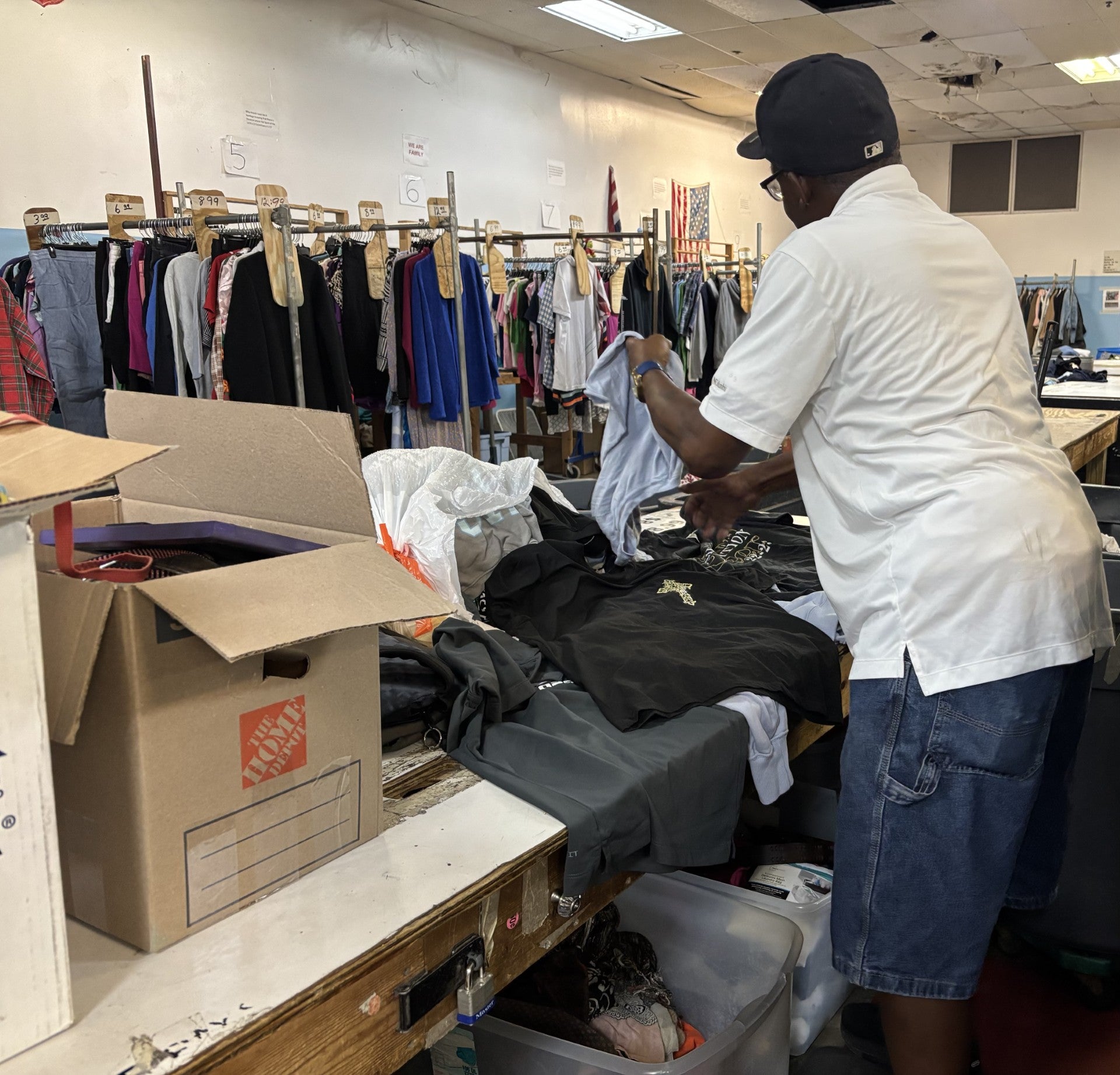
Another important component of the ARC program is work therapy. It helps the participants integrate into being responsible for varying assignments at the facility. The program helps participants learn to take pride in their work, show up on time as well as work well and communicate with others. Some of the jobs include working in the kitchen, the warehouse dock, yard and building maintenance and working at the Thrift Store.
“Everyone comes in with their own stuff. Each person is in a different place in their journey, and each has baggage when they come. Some have pretty big attitudes and aren’t willing to work with us until they understand we’re trying to give them the best shot that we can,” explained Tasha. “We’re not going to do the work for them but give them the tools and resources they need in order to get themselves in the right place.”
It is this combination of accountability, support and spiritual guidance that leaders believe sets the ARC apart and helps men build a foundation for long-term recovery.
Allen believes the ARC is an important resource for Northeast Florida. “I think it’s one of the safest, cleanest programs around and with the program being spiritually based, we understand exactly where we ‘re going, and what we want for individuals as we identify the causes of their need,” he said. “We hope through the spiritual generation, they can see long-term sobriety, which comes through a relationship with Jesus Christ.
The importance of programs like the ARC becomes even clearer when viewed against the backdrop of a growing substance abuse crisis in the region. “It’s a big deal that these adults are getting drugs either through intentional or unintentional means. It’s an epidemic and we see it in the community that we serve,” said Tasha.
The rehabilitation program is also free of charge. “We’re 100 percent supported by our Thrift Store. It’s how we clothe, feed, and provide shelter, classes and opportunities for all 126 guys. We don’t have any government funding or large private donors,” Tasha noted.
That’s why donations to the Thrift Store are so important. “We’re providing well-priced items, so families on a budget can access them and in turn fund our program. The monies from the thrift store all stay here to support these men in the program, so they can become productive citizens,” she said.
Thanks to the support generated through thrift store donations, the program continues to provide critical services to men working toward recovery and independence. The ARC program maintains a 95 percent occupancy rate and a 20 percent graduation rate.
One of the biggest rewards for the Tanners is seeing the change firsthand in the participants upon completion of the six-month program. Tasha says when each participant arrives, they have they’re photo taken, no matter what they look like, and some can look “really rough.” Then six months later, participants’ photos are taken again.
For the Tanners, those before-and-after photos serve as powerful reminders that recovery is about far more than appearances—it’s about restoring hope, purpose and a future.
“These photos are the best visual representation of change,” noted Tasha. “You can literally see the difference in people’s lives. Some people come in unshaven and unkempt, so the visual transformation is easier to see, be we can really tell the change by their eyes. We see eyes that were once hopeless and then in the end eyes that sparkle with hope.”
For the Tanners, those sparkling eyes say it all. They are proof that change is possible—something Danny knows firsthand. After decades of addiction, he now looks toward the future with hope, faith and the confidence that lasting recovery is within reach.