Preventing Homelessness in Hopkinsville, KY
By Brad Rowland /
In many communities across the Southeastern United States, rising cost of living and other financial challenges pose a consistent challenge to many families. In the community of Hopkinsville, Kentucky and the surrounding Pennyrile region of the state, those issues are magnified with the clear scarcity of affordable housing. With that reality as the backdrop, The Salvation Army of Hopkinsville recently sprang into action to provide more than $190,000 in direct rental assistance, preventing eviction for 58 local families over a two-month period.
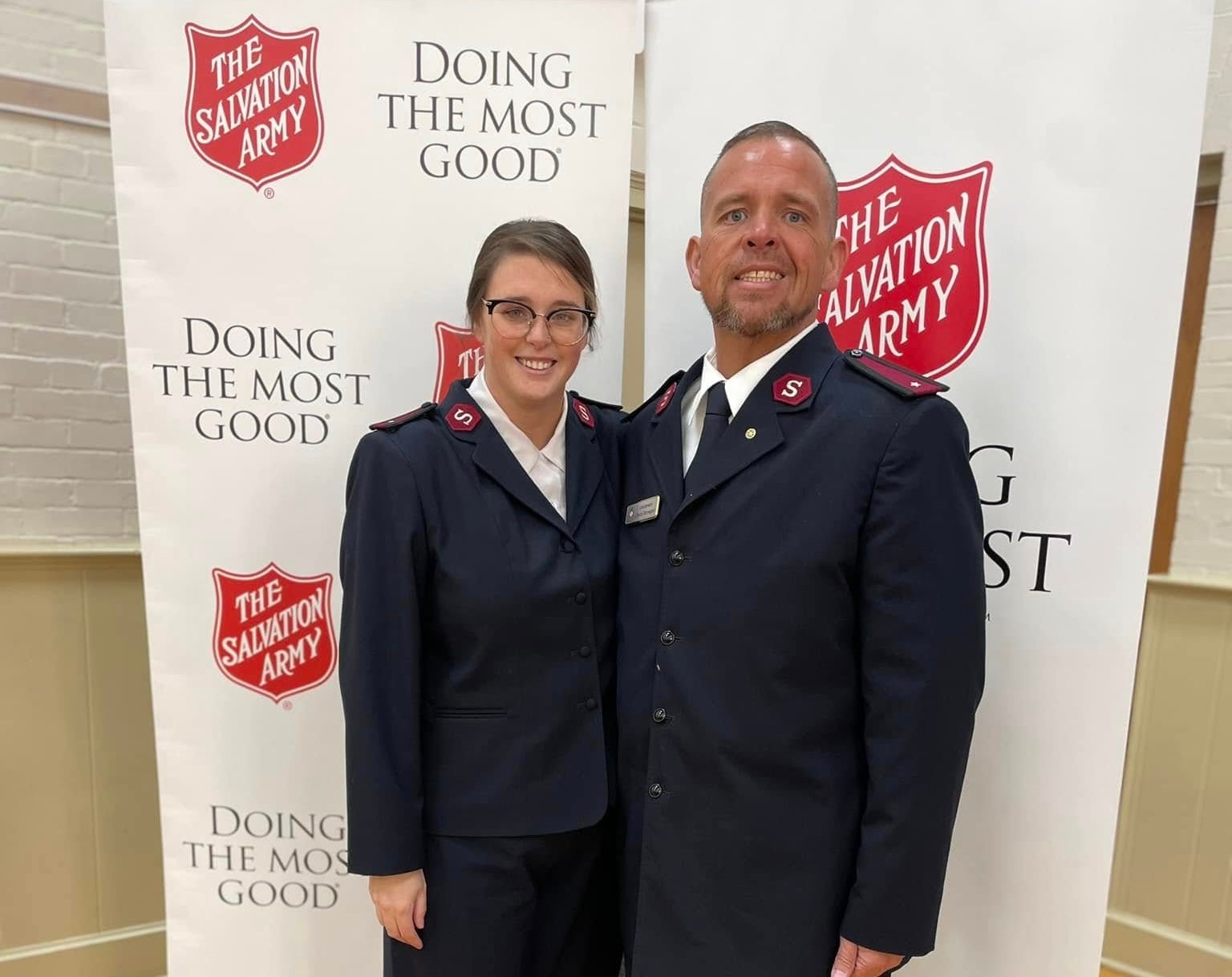
Lieutenants David and Brittney Donegan, who serve as corps officers in Hopkinsville, saw the problems unfolding firsthand in their interactions with local families.
“One afternoon, Brittney and I were sitting in our office, and the phone just kept ringing,” Lieutenant David says. “Call after call. Families being kicked out of their homes because they had to choose between rent, eating, childcare, or medication. These are the daily things you and I take for granted, but for them, it was survival.”
Unfortunately, there were also some obstacles in place to prevent The Salvation Army from meeting the immediate need.
“We were having to turn people away,” Lieutenant David shares. “Not because we did not care, but because our shelter was already full. The heartbreaking part was that other nearby shelters were calling us asking if we had openings. Everyone was overwhelmed.”
“We looked at each other and said, ‘We have to do something,’” says Lieutenant Brittney. “We pulled our team together and began to brainstorm how to slow the crisis down.”
The Salvation Army of Hopkinsville soon received a grant from the state of Kentucky’s Continuum of Care with the charge to use the funding in the most effective way possible to prevent families from entering the cycle of homelessness. Lieutenant David shares that “the first thing that came to mind for us was prevention,” explaining that, with the cost of living rising, families were having to make impossible choices between paying for things like food and medication or paying their rent.
What emerged was a three-pronged, proactive response that included the direct payment of owed rent to prevent eviction, the ability to pay two months of rent in advance to provide families with breathing room, and direct funding to landlords to pave the way toward stable, long-term housing. Lieutenants David and Brittney both claim that one of their biggest strengths through the process was their dedicated four-person team, led by Alisa Barton, director of social services for The Salvation Army in Hopkinsville.
Barton is a 25-year veteran of The Salvation Army’s ministry, and Lieutenant David shares that she has been “serving longer than I have been,” while praising Barton’s knowledge, leadership, and heart for others as “the backbone of this entire initiative.”
Barton was flanked by three case managers, all of whom dutifully kept the process moving in an efficient manner through document verification, client family meetings, communication with landlords, and other key steps. “These women were the hands and feet of Christ in this process,” Lieutenant Brittney says. “Every approval, every phone call, every late-night conversation with a family in crisis. This program succeeded because of their faithfulness.”
Though the funding was targeted in this case, it is also a representation of a larger, comprehensive housing vision in Hopkinsville. This includes rapid rehousing and permanent supportive housing initiatives that already serve, and will continue to serve, hundreds of local families.
Amy Frogue, director of community and economic development at the Pennyrile Area Development District, shares that “prevention programs like this make a critical difference,” and praises The Salvation Army’s continued impact in the region. Lieutenants Donegan reflect on one of the consistent themes of the Army’s work in Hopkinsville — that the work is never transactional, but rather transformational.
“We celebrate when someone gets their keys,” Lieutenant Brittney says. “It is not just about moving them into a place. It is helping them make it a home.”
Lieutenants Donegan share the firm belief that the prevention of homelessness is ministry, and that keeping a family in a safe living place protects their stability and dignity while maintaining a sense of hope.
“When an eviction is prevented, a family gets the breathing room that they desperately need to recover, rebuild, and remain rooted in the community,” says Lieutenant David. “That is not just social work; that is Kingdom work... Proverbs 31:8-9 urges us to ‘speak up for those who cannot speak for themselves’ and to ‘defend the rights of the poor and needy.’ I believe that is exactly what prevention does. It places us in the gap before the fall, and Jesus modeled this kind of ministry repeatedly.”
Lieutenant David also indicates that while challenges persist, “homelessness is not inevitable and prevention is possible when compassion, faith, and our community come together.”
“We can’t solve everything,” says Lieutenant Brittney. “But we can be faithful. We can be present. And we can keep families together.”