Potomac Division Honors the Fallen at Pentagon Memorial Service
By K. Wentworth and M. Wolfe /
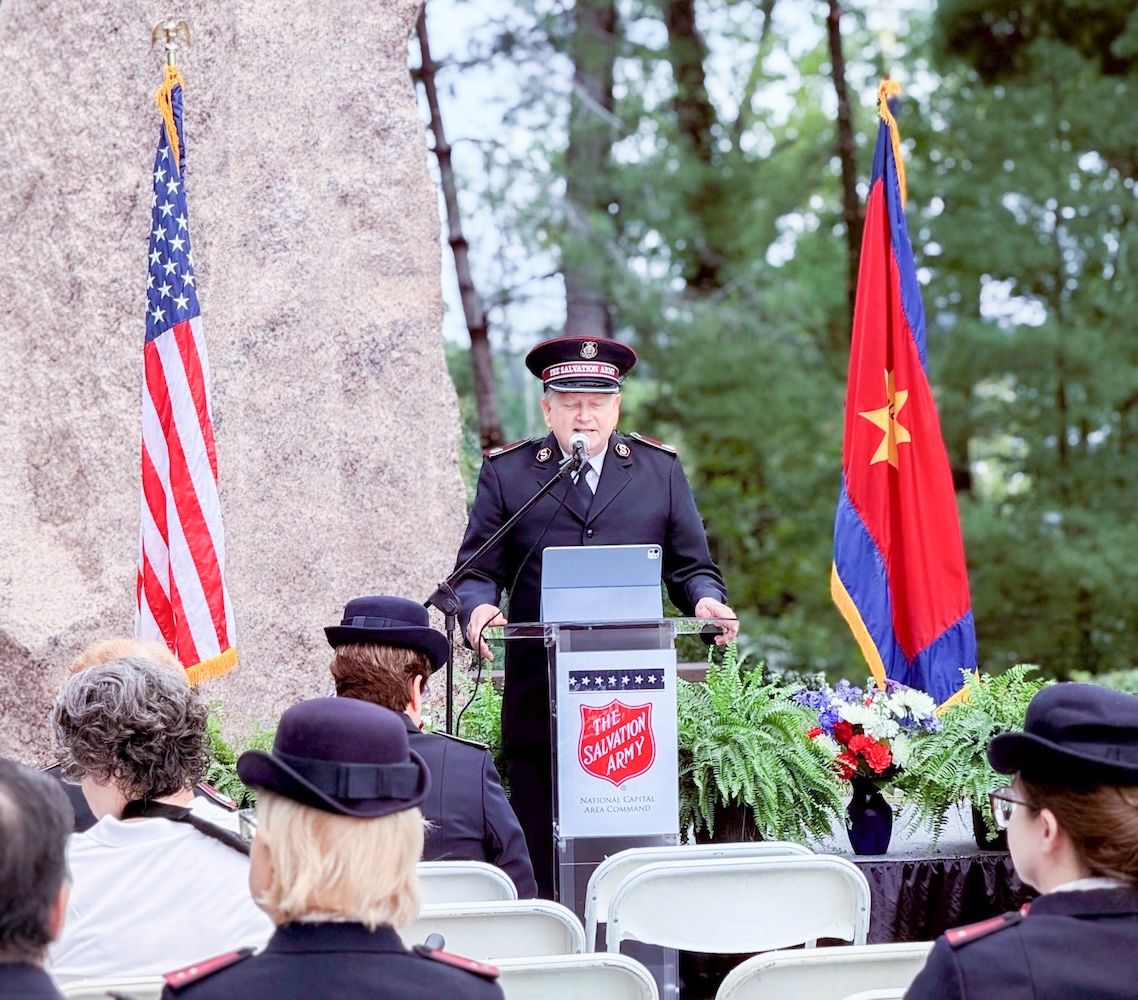
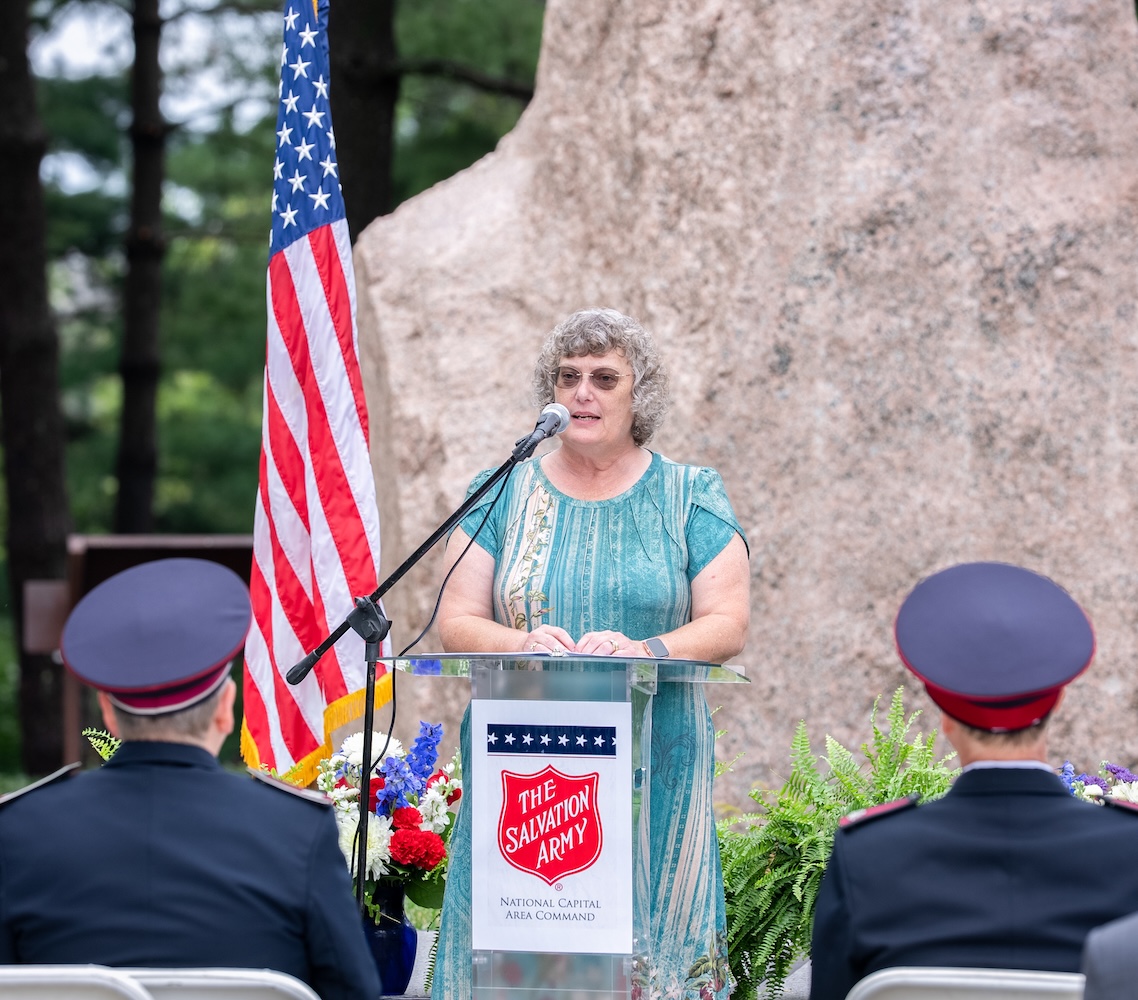
On the 25th anniversary of September 11, The Salvation Army National Capital Area Command gathered at Lady Bird Johnson Park to pray and remember.
Salvation Army USA national leaders Commissioners Merle and Dawn Heatwole, along with National Capital Area Commanders Majors Todd and Wilma Mason, were joined by officers from across the Potomac Division to remember the lives lost on September 11, 2001, and to reflect on The Salvation Army’s response in our nation’s capital following the attack on the Pentagon.
“I thank you for joining us for this very special service as we commemorate the 25th year since the events of 9/11 changed the landscape of our country,” said National Commander Commissioner Merle Heatwole. “Today, we remember the lives of those we lost, the collaborative efforts of the military, human service organizations, and first responders, and the prayers of our nation and the world that brought us together in unity.”
Glennys Warsocki, current Salvation Army advisory board member and U.S. Army lieutenant colonel stationed at the Pentagon 25 years ago, was on leave on the day of the attack. “At 9:37 that morning, American Airlines Flight 77 struck the Pentagon. 125 lives were lost at the Pentagon and 64 aboard that flight. But God is good.”
She described how the part of the Pentagon struck by the plane had just been renovated, adding steel reinforcement, Kevlar cloth lining, and blast-resistant windows — improvements which saved many lives that day. An impact anywhere else would have been much more catastrophic. “The loss of 125 military and civilian personnel at the Pentagon was tragic, and it was awful. But to put it in perspective, over 23,000 people work at the Pentagon every day.”
Having the memorial service at Lady Bird Johnson Park was of particular significance. In the aftermath of the attack, children from the Pentagon daycare were evacuated to the park for safety. Twenty-five years later, gathering in that same peaceful place offered an opportunity to include the youngest members of the Pentagon community in the lives forever changed that day.
The Salvation Army was among the first organizations to respond on September 11. Within 90 minutes of the attack, a Salvation Army mobile feeding unit arrived at the Pentagon and established a service site just steps from the impact location. Teams provided food and hydration while caregivers offered emotional and spiritual support to those who had been inside the building, those searching the rubble, and the many first responders and military personnel working through the aftermath.
“September 11th is also about the recovery story,” Warsocki continued. “One of the things I find most meaningful about the stories of September 11th is that in the middle of unimaginable tragedy, people simply began helping each other.”
As the relief operation grew, The Salvation Army took on the enormous responsibility of coordinating food service at the Pentagon and several nearby locations. In the Pentagon’s south parking lot, a makeshift food court known as “Camp Unity” became a place where people could find a meal, a moment of rest, and a sense of community. Working alongside organizations including the American Red Cross, McDonald’s, Outback Steakhouse, Southern Baptist Disaster Relief, and Starbucks, The Salvation Army helped provide 502,330 meals over 13 days.
“But The Salvation Army provided something that couldn’t be measured in meals,” Warsocki explained. “We provided a place to sit, a place to breathe, someone to listen, someone to pray with you.”
Throughout the memorial service, the names of all 184 innocent lives lost during the attack on the Pentagon were read aloud. Twenty-five years later, we continue to remember those who were lost, those who responded, and the enduring spirit of service that brought people together in one of our nation’s darkest moments.