Made to Belong
By Major Sandra Pawar /
As we begin a new program year, we also begin a new book study journey together. This year’s study aligns with our Territorial Soldiership Invitation, inviting people to engage with soldiership through three important movements: Belong, Become, and Be Sent.
My prayer is that we won’t simply read these books or complete the Bible studies. I hope we will allow them to shape us. I hope we will grow in our sense of belonging, deepen our discipleship, and discover where God is sending us in mission.
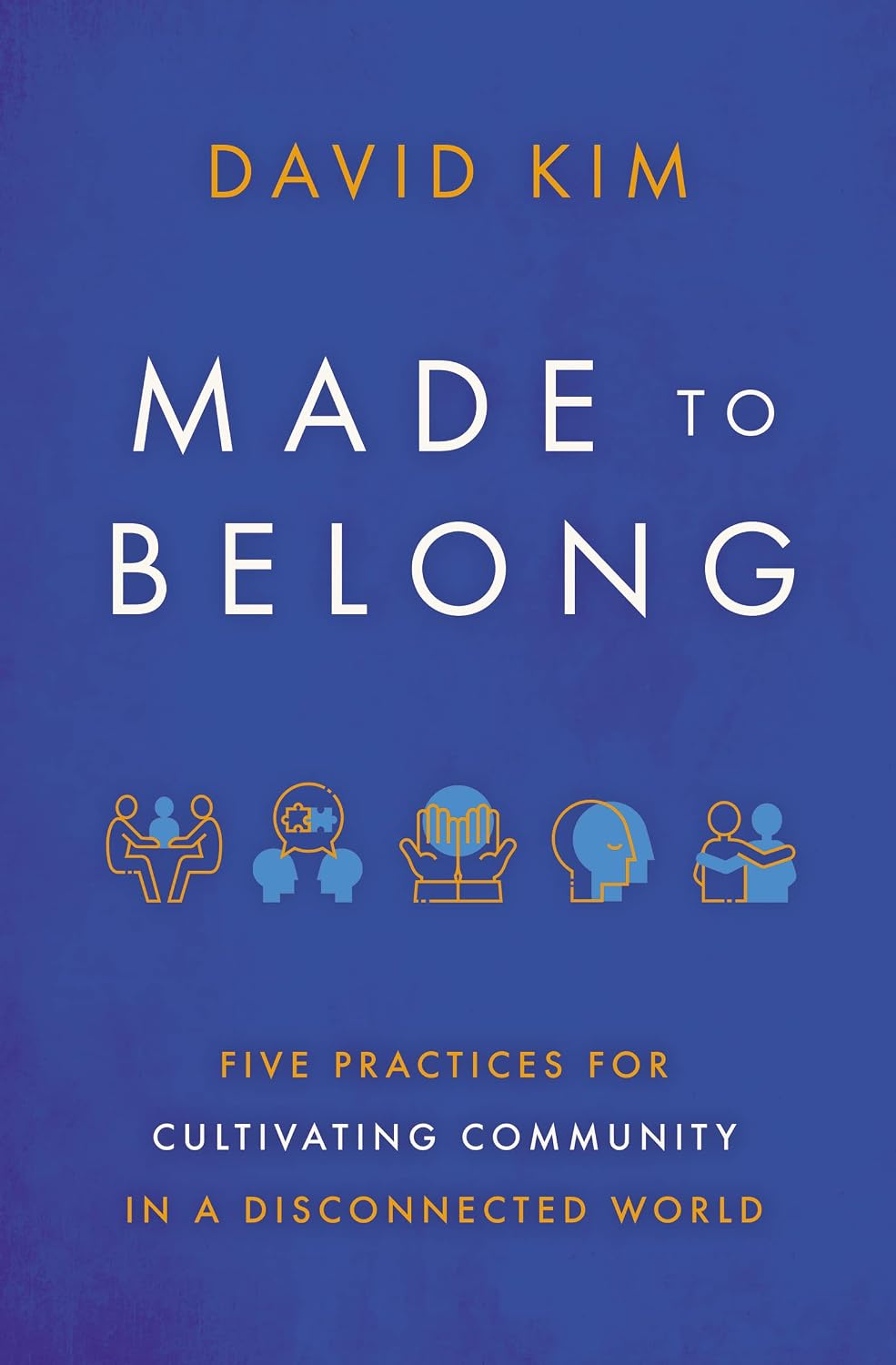
Our first book is “Made to Belong: Five Practices for Cultivating Community in a Disconnected World” by David Kim. While reading it, I have found myself thinking deeply about loneliness, community, and what it really means to belong.
Kim describes loneliness as more than just being alone; it is the gap between our desire for meaningful connection and our actual experience of it. We can be surrounded by people and still feel unseen, unknown, disconnected, and isolated.
One of the stories that stayed with me was his experience of immigrating to America as a young Korean child. He shares what it felt like to be an outsider, teased because of his name, accent, appearance, and culture. Like many of us, he simply wanted to fit in. He writes about wondering where he would sit at lunch, whether anyone would invite him to their table, and whether he could make it through another day of feeling alone.
His story reminds us that belonging is not a luxury; it is a deep human need. Throughout the book, Kim asks some challenging questions:
- Who are my people?
- Where do I experience meaningful belonging?
- Why can belonging be so difficult to find?
- How many people really know me?
- Why can I be surrounded by relationships and still feel alone?
- How do I cultivate deeper spiritual friendships?
As I reflected on these questions, I found myself thinking about The Salvation Army.
We live in a world where we are more connected than ever, yet genuine connection often seems harder to find. We have social media, programs, meetings, and activities, but many of our relationships remain at a surface level. Yet Scripture tells us that belonging has always been part of God’s design.
In Genesis 1:26, God says, “Let us make mankind in our image.” From the beginning, we see a God who exists in relationship. In Genesis 2:18, God declares, “It is not good for the man to be alone.” We were created for relationship with God and with one another.
Sin fractured those relationships. It introduced separation, division, self-interest, and brokenness. But through Jesus, God reconciles us to Himself and invites us into restored relationships with others.
That leads me to an important question: if we are a people who belong to Jesus, are we also a people who create belonging?
The Salvation Army does so much good. We provide food, shelter, emergency assistance, worship opportunities, discipleship, disaster response, community programs, and countless other ministries. But someone can receive help from us and still feel alone. Someone can attend a corps for years and never form a meaningful friendship. A refugee can receive practical support without ever feeling that their culture, story, and experiences are truly valued. An older adult can participate in programs and still feel invisible.
Belonging requires more than serving people; it requires living in relationship with people.
As I’ve reflected on this, I’ve also thought about soldiership. Perhaps people today are not simply looking for another church to attend. Perhaps they are looking for people with whom they can share life, faith, purpose, and mission. They want to know they matter. They want to know they are seen. They want to know that their gifts have value and that their lives can make a difference.
Could it be that soldiership is, in part, an invitation into deeper belonging?
At its best, soldiership is much more than signing a covenant or joining an organization. It is a declaration that says: “These are my people. This is my mission. This is where God is calling me to serve.” Soldiership gives people a place not only to receive ministry but to participate in the mission of Jesus. It invites us to serve, lead, sacrifice, grow, disciple others, and create space for others to belong.
Perhaps one of our greatest challenges is not simply encouraging people to commit to The Salvation Army. Perhaps it is creating communities so rooted in Jesus, love, and authentic relationships that people discover they have found a place where they truly belong.
So, as we begin this study, I want us to reflect on a few questions:
- Who is missing from our tables, programs, and conversations?
- Who feels unseen?
- Who is sitting alone?
- Whose voice have we not heard?
- Who have we unintentionally made to feel like an outsider?
- Who might be longing not just to attend, but to belong and give their life to something bigger than themselves?
My hope is that The Salvation Army will be a place where people can honestly say: “These are my people. They know me. They see me. They make room for me. I have something to contribute. I am safe here. I belong.”
Belonging is not another program we offer; belonging is part of our mission. And perhaps it is also one of the most important ways we invite people into soldiership.
If we belong to Christ, then we are called to become a people who make room for others to belong as well, to belong to God, to one another, and to the mission of Jesus.