Homelessness Is Not One Problem
/ location_onKNOXVILLE, TN
Homelessness is becoming harder to ignore in Knox County. Most of us see it more often than we used to. We see people sleeping outside, standing at intersections, walking with all their belongings, or gathering near places where services are available. Business owners, churches, service providers, police officers, hospitals, and neighbors who are all experiencing the same issue from different angles.
And because people are seeing it more, they are talking about it more.
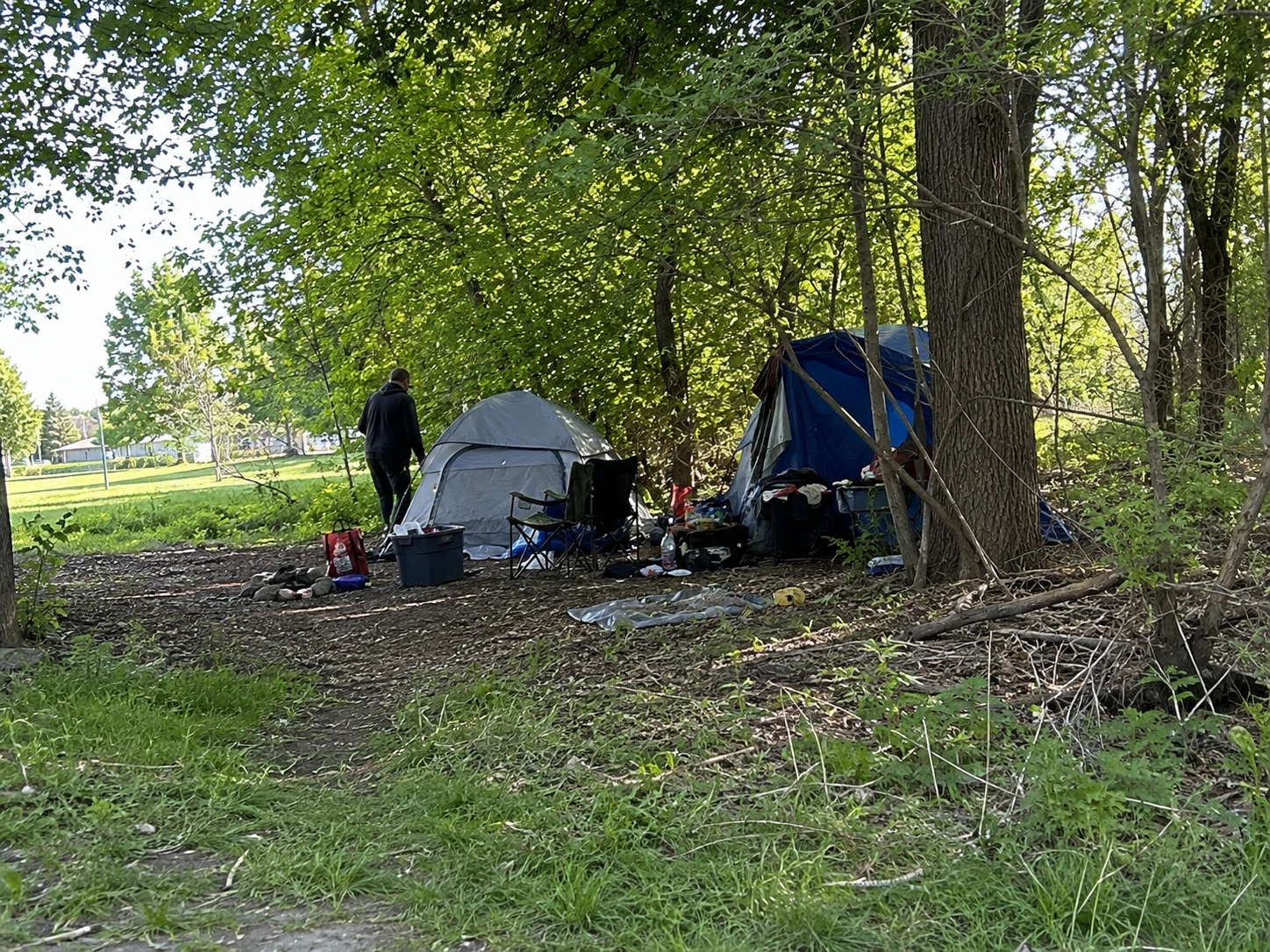
That’s a good thing. Communities should talk openly and honestly about hard problems. But often those conversations are laced with anxiety and misinformation, and lack broad perspective on the myriad causes of homelessness.
For some, homelessness is about the lack of affordable housing. For others, it is about addiction, mental illness, public safety, personal responsibility, poor choices, government policy, or whether public spaces are being used appropriately. Depending on who is speaking, the same conversation can become a debate about rent prices, tents, drug use, crime, safety, compassion, accountability, or taxpayer dollars.
The problem is that homelessness is rarely just one of those things.
Homelessness in Knox County
In Knoxville and Knox County, the 2025 Point-in-Time Count found 1,174 people experiencing homelessness on a single night in January, including 245 people who were unsheltered. A count like that does not tell every story. It does not include every person staying temporarily with a friend, sleeping in a car, living in a motel they can barely afford, or moving from couch to couch. But it does give us a snapshot of a problem that many people already sense is growing.
Residents across Knox County are noticing homelessness in places far beyond downtown. In recent years, concerns have been reported in West Knoxville, Cedar Bluff, Farragut, and other parts of the county, including people sleeping in cars, staying in wooded areas, or camping close to where they work. For some residents, homelessness used to feel like something that “happens somewhere else.” It may now be something they see near a favorite grocery store, beside a church, or in a neighborhood where they did not expect to see it.
This naturally leaves all of us asking the same question – Why?
Why Are So Many Homeless?
Housing is a major part of that problem. Across the country, there are not enough rental homes that people with very low incomes can afford. The National Low Income Housing Coalition reports a shortage of more than 7 million affordable and available rental homes for extremely low-income renters. There are only 35 affordable and available homes for every 100 extremely low-income renter households.
That means a person can be working, sober, trying everything they can think of, and yet are still unable to afford a place to live.
But housing is not the whole story. Many people experiencing homelessness are also dealing with one or more complicating factors, including:
- untreated mental illness
- addiction
- trauma
- disabilities
- chronic health problems.
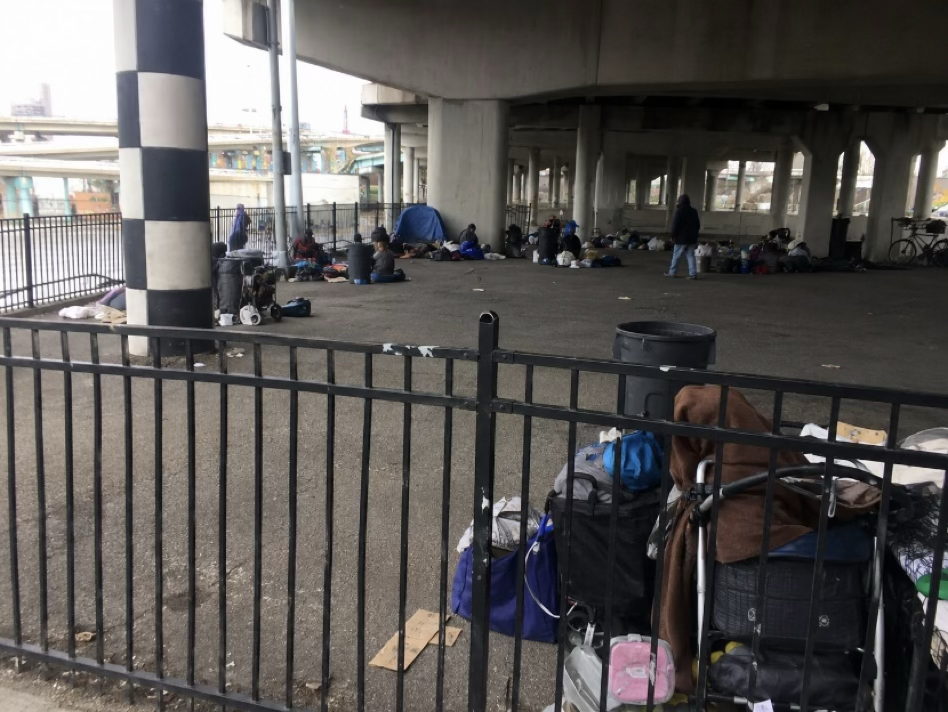
Homelessness increases a person’s risk for both infectious and non-infectious diseases. When someone is sleeping outside, missing medications, unable to shower, and cut off from regular care, every other problem becomes harder.
This is where the public conversation often breaks down.
One person says, “They need housing.” Another says, “They need treatment.” Another says, “We cannot have people camping in public spaces.” Another says, “Some people are homeless because they want to be.” All of those responses are right, and at the same time, incomplete.
Individual Responsibility and Grace
It is fair to say that personal choices can and often do play a role in homelessness. Addiction, broken relationships, criminal behavior, poor financial decisions, refusing help, or exhausting every available support system can all contribute to a person losing housing or remaining homeless. People who work in shelters, outreach, hospitals, churches, law enforcement, and downtown businesses know this. So do family members who have tried everything they knew to do for someone they love.
But even when bad choices are part of someone’s story, the community still has a stake in what happens next. Leaving people outside with untreated illness, addiction, trauma, or desperation does not make Knoxville healthier. It does not make neighborhoods safer. It does not help businesses. It does not reduce the strain on hospitals, police, jails, shelters, or emergency services. It simply allows the crisis to keep growing in public view.
Recent public opinion research found that many Americans believe personal choices are a major factor in poverty and homelessness, while at the same time also believing that government and communities have some obligation to respond. That is not necessarily a contradiction. It reflects the reality that a person may not be blameless, but they are still a person.
From a Christian perspective, that distinction matters. Grace does not mean pretending choices have no consequences. It also does not mean reducing a person to the worst decision they have made. A person can need accountability and still need help. A person can be responsible for part of their situation and still be worthy of compassion.
No Easy Solutions
The visible parts of homelessness often create the strongest reactions: tents, encampments, panhandling, emergency calls, and concerns from residents and businesses. Those concerns are real and they should not be dismissed.
But even there, the conversation is bigger than one issue. Moving someone from one location to another may address an immediate concern in one area, but it does not answer the deeper question: where will that person go, and what is actually keeping them from becoming stable?
The same is true of shelter. Shelters matter. People need a safe place tonight. But shelter alone does not create affordable apartments. It does not provide long-term treatment. It does not repair years of trauma. It does not fix every medical, legal, employment, family, or financial barrier a person may face. Shelter is necessary, but it is not the whole answer.
It’s easy for people to talk past each other. Each person may be describing something real, but only one part of the picture. A business owner may be thinking about safety and customers. A hospital may be thinking about patients with nowhere to go after discharge. A police officer may be responding to repeated calls at the same location. A shelter may be trying to manage more need than it has beds or staff to handle. A church may be trying to help without knowing whether help is actually helping. A neighbor may feel compassion and frustration at the same time.
None of those perspectives tells the whole story. But none of them should be ignored either.
Homelessness is usually many problems colliding at once: high rent, low wages, illness, addiction, trauma, family breakdown, lack of support, poor choices, and systems that do not always connect well with one another. There isn’t one solution.
Serving From Many Angles
We see this every day at The Salvation Army of Knoxville. Our role is not to pretend we can meet every need alone, but to recognize how many different pieces are involved. That is why partnership matters so much in this work. Healthcare providers, behavioral health professionals, recovery organizations, veteran services, housing partners, churches, outreach workers, and nonprofits all see different parts of the same struggle. No single organization holds the whole answer. The work only begins to make sense when people and groups with different strengths are willing to serve the same neighbors from different angles.
Homelessness is not one problem, and our response can’t focus on just one thing. It takes all of us working together in symphony.
Read More About This Topic:
Knoxville-Knox County 2025 Annual Point in Time Count Report
The Gap: A Shortage of Affordable Homes
NLIHC Finds Shortage of 7.2 Million Affordable and Available Homes for Extremely Low-Income Renters