Give Wings to Freedom. Help Trafficking Survivors Return Home.
Share Story
Date
Wings to Freedom is The Salvation Army World Service’s January fundraising initiative, launched during National Slavery and Human Trafficking Prevention Month. Our goal: to fund 10 emergency repatriation flights for survivors of human trafficking, helping them return home, rebuild their lives, and begin the journey to healing.
Why Repatriation Matters
Every survivor deserves a way home. For those exited from trafficking - whether for labor or exploitation - the journey home is the first step toward safety and recovery. The Salvation Army’s Anti-Human Trafficking (AHT) teams work globally to identify, support, and repatriate survivors, providing holistic care that extends beyond the flight itself.
The Scale of Need
-
Rising Demand, Shrinking Resources:
In 2024, The Salvation Army facilitated 1,018 repatriations for survivors across Africa, the Americas, Europe, South Asia, and the South Pacific/East Asia, which was a significant increase from previous years. Yet, the number of people seeking help continues to grow, with more referrals and urgent cases arriving every month.
-
Global Crisis:
Worldwide, thousands more are waiting for assistance. In 2023, the International Organization for Migration supported over 8,238 vulnerable migrants, 27% of whom – or 2,224 - were identified as victims of trafficking. Despite this escalating need, overall funding for repatriation and reintegration is declining, leaving many survivors at risk and local teams struggling to provide essential support.
-
The widely cited Global Slavery Index and International Labour Organization (ILO) estimates indicate that about 50 million people were living in modern slavery, including human trafficking, on any given day in 2021. This figure was published in 2022 and is updated every five years (walkfree.org).
-
A recent study by UK universities (Royal Holloway and Lancaster) revised this estimate upward to approximately 65.3 million people, using multiple data sources for greater accuracy (royalholloway.ac.uk).
-
Economic Impact:
The economic cost or illicit profits from human trafficking and modern slavery are estimated at $236 billion annually by the ILO, with some independent reviews suggesting it could be as high as $498 billion (hopeforjustice.org; gcffc.org).
-
Your Impact Matters:
With less funding available, every donation is critical. Your support helps bridge the gap, ensuring survivors not only return home, but also receive the care and resources they need to rebuild their lives safely. The average flight for someone who has been trafficked costs $550. Reintegration support costs $993.83 per person. Overall, therefore, it costs The Salvation Army $2,500–$3,500 to get each survivor repatriated and supported while they build a new life over the first twelve months.
Labor Trafficking: The Hidden Crisis
While sex trafficking often makes headlines, labor trafficking is a silent epidemic. Survivors are forced into construction, agriculture, domestic work, and other industries, often far from home and without support. The Salvation Army’s global response addresses both forms, ensuring survivors of labor trafficking receive the same urgent care and pathway home.
Stories of Hope
Amy’s Journey: A Story of how a 14-year-old rebuilt her life after being trafficked.
"The goal is not rescue, but restoration. Today, Amy is safe, supported, and making progress on her own terms."
At just 14, Amy was trafficked from the United States into Mexico, enduring years of violence, isolation, and the loss of her identity. After five years, pregnant and desperate for help, she reached out to her mother, who turned to The Salvation Army for support. Through a quiet, coordinated effort involving staff in both countries, the U.S. Embassy, and anti-trafficking specialists, Amy was discreetly reunited with her mother and brought to safety in Los Angeles. She now lives in a confidential Safe House operated by The Salvation Army, where she is rebuilding her life with ongoing support.
Amy’s story is not unique. It reflects the complex realities of trafficking and the importance of sustained, collaborative care. The Salvation Army’s anti-trafficking work is rooted in partnership and restoration, providing survivors with housing, legal aid, case management, and peer-led programs. In 2023-2024, thousands of survivors like Amy were served, with hundreds receiving transitional or long-term housing and several assisted in repatriation. Amy’s journey demonstrates the power of a safe return and the ongoing fight to help survivors reclaim their lives and dignity.
Read Amy's full story here.
Saanvi and Ishra’s Story: A family’s reunion after forced labor and separation.
"Ishra’s past did not determine her future. With courage and support from The Salvation Army, she and her mother, Saanvi, broke free from exploitation. Today, Ishra is creating a life filled with dignity, hope, and possibility."
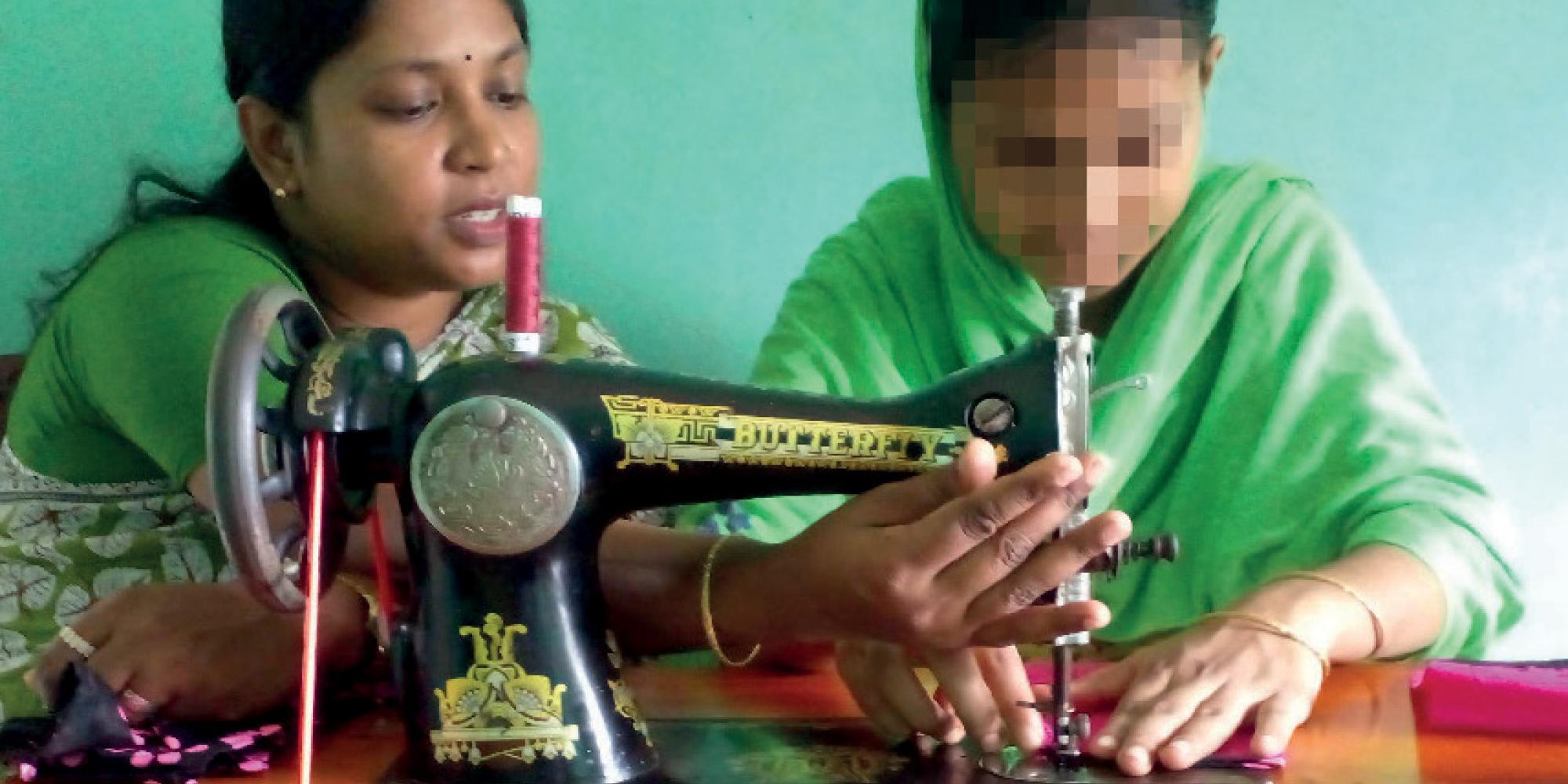
Saanvi was sold into sexual exploitation by her abusive husband and forced to raise her daughter, Ishra, in a brothel in Bangladesh. Tragically, Ishra was also drawn into the sex trade at a young age. With ongoing support from The Salvation Army, Saanvi eventually left the brothel, but passed away soon after. Inspired by her mother’s courage, Ishra sought help, started her own grocery store, and began rebuilding her life with assistance from the Salvation Army’s local support program. The program provides safe spaces, education, and skills training for women and children escaping cycles of abuse, and has helped dozens of women leave exploitation behind. Saanvi and Ishra’s story is a testament to resilience, hope, and the power of community-led support
Read Saanvi & Ishra's full story here.
Diego’s Story: From labor trafficking to freedom, Diego’s story highlights the urgent need for repatriation.
"Though the road ahead remains uncertain, Diego holds on to hope. With each passing day, he takes another step towards a life of dignity and freedom."
Diego, a 40-year-old man from Latin America, arrived in Norway with dreams of a better life, lured by promises of stable work and security. Instead, he was trapped in labor trafficking, his wages siphoned away, forced to work long hours, and threatened when he tried to stand up for his rights. After a chance encounter with police, Diego was able to escape and found refuge at the Filemon Safe House, operated by The Salvation Army. There, he received counseling, practical support, and daily work experience, slowly regaining his independence and hope. Diego’s story highlights the urgent need for repatriation and holistic support for survivors of labor trafficking, showing how a safe return and ongoing care can help restore dignity and freedom.
Read Diego's full story here.
Kaira’s Story: From Modern Slavery to a New Beginning.
Kaira’s story highlights the importance of coordinated reintegration support for survivors of modern slavery and human trafficking.“It was reassuring having The Salvation Army's full support from the start of the process. I found it helpful having someone at TSA to talk to and being reunited with my family." — Kaira
Kaira, a survivor of modern slavery and human trafficking in the UK, longed to return to her home country, the Philippines, after years away. Through The Salvation Army’s Beyond Programme and its network of partners, Kaira received reintegration assistance that included flights, financial aid, and psychosocial support. With help from the UK Home Office Voluntary Return Service (VRS) and the Salvation Army National Contact Person in the Philippines, Kaira safely returned home, reunited with her family, and began rebuilding her life. Today, she runs her own pizza franchise, sustaining her family and reclaiming her independence. Kaira’s story demonstrates how collaboration and holistic support can restore dignity and prevent re-trafficking.
The Beyond Programme received an enquiry from an advocate at one of our referral partners in the UK. The advocate had enquired about reintegration assistance for a survivor of modern slavery and human trafficking in the UK, Kaira*, who was seeking to return to her country of origin, the Philippines. Kaira was understandably anxious about returning to the Philippines as she had not been back for a long time and wanted to find out more about her options on return. Kaira had outlined her essential reintegration needs as accessing return flights, financial aid, and psychosocial support.
Beyond connected with the National Contact Person (NCP) in the Philippines and we scheduled an online meeting with the NCP, advocate, Kaira and Beyond coordinator. This gave an opportunity for Kaira to be provided options of reintegration support on return, with the NCP informing us of the local context which included support services which Kaira could access. The online meeting also provided an opportunity for Kaira to build trust with the NCP and Salvation Army team in the Philippines, so that she was comfortable with them before her arrival.
Kaira was able to access assistance from the UK Home Office Voluntary Return Service (VRS), a service which offers practical support to people with no right to live in the UK who have decided that they wish to return home. A VRS caseworker supported Kaira by purchasing and booking flight tickets from the UK back to the Philippines. Kaira was also able to access financial support from VRS to aid her reintegration. As the date of the departure flight moved nearer, Beyond set up a pre-departure online video call to go through the plan in place for reintegration aid. The meeting provided a space to reflect on Kaira’s return and ask any final questions.
On arrival at the airport in the Philippines, Kaira reunited with her family after having been separated across borders from them for many years. The National Contact Person connected Kaira in with a social worker, providing her psychosocial support since returning. Using the funds from VRS, Kaira is also now running her own Pizza franchise business, and the income she is making helps to sustain hers and her families' essential needs. The NCP in the Philippines will continue to welfare check Kaira, to follow up on her safety, essential needs, and supportive relationships.
The coordination of reintegration support for Kaira’s return to the Philippines ensured that she would return safely and received appropriate assistance to support with her repatriation needs. The Beyond Programme welcomes the collaboration of our internal network, Salvation Army National Contact Persons, and external network to establish return and reintegration assistance for survivors of modern slavery and human trafficking to support with their protection and the prevention of re-trafficking.
Read Kaira's full story here.
How You Can Help
Donate Today. Give the Gift of Freedom.
Every dollar gets us closer to restoring a life. Your gift helps survivors return to safety and begin a new chapter with dignity and care.
Give freedom today