Faith Matters and Restoration is Possible
By Kristin Mudge /
About three years ago, the Substance Abuse and Mental Health Services Administration (SAMHSA), a U.S. federal agency focused on improving behavioral health nationwide, contacted the organization Adult & Teen Challenge (ATC) with a proposition: they had federal money for rehabilitation programs but needed their help to verify more information before it could be awarded.
ATC is a faith-based non-profit with more than 215 residential centers in the U.S. and Canada that focus on providing adults and teens with freedom from life-controlling issues through Christ-centered solutions. After being approached by SAMHSA, their leadership contacted Citygate Network, another faith-based non-profit working to end substance abuse and homelessness in North America. In their meeting, The Salvation Army was identified as the third “big hitter” in this area of service.
The federal government differentiates rehabilitation programs from clinical programs as faith-based programs for recovery. SAMHSA decided they do not want to exclude these faithbased programs from opportunities for federal money because they believe that faith improves long-term outcomes for recovery. But in order for the government to be able to award grant funding, the organizations have to measure outcomes, not just outputs, which is what the three groups – ATC, Citygate Network, and The Salvation Army – all currently measure.
The CEOs of ATC and Citygate met with the then National Commander for The Salvation Army, Commissioner Ken Hodder, to discuss how all three groups could work together to begin measuring lasting outcomes of their faith-based rehabilitation programs. And while being clear from the beginning that The Salvation Army was not currently interested in applying for government grants, Commissioner Hodder was happy to join forces with the other two groups to measure how faith-based recovery programs impact lives.
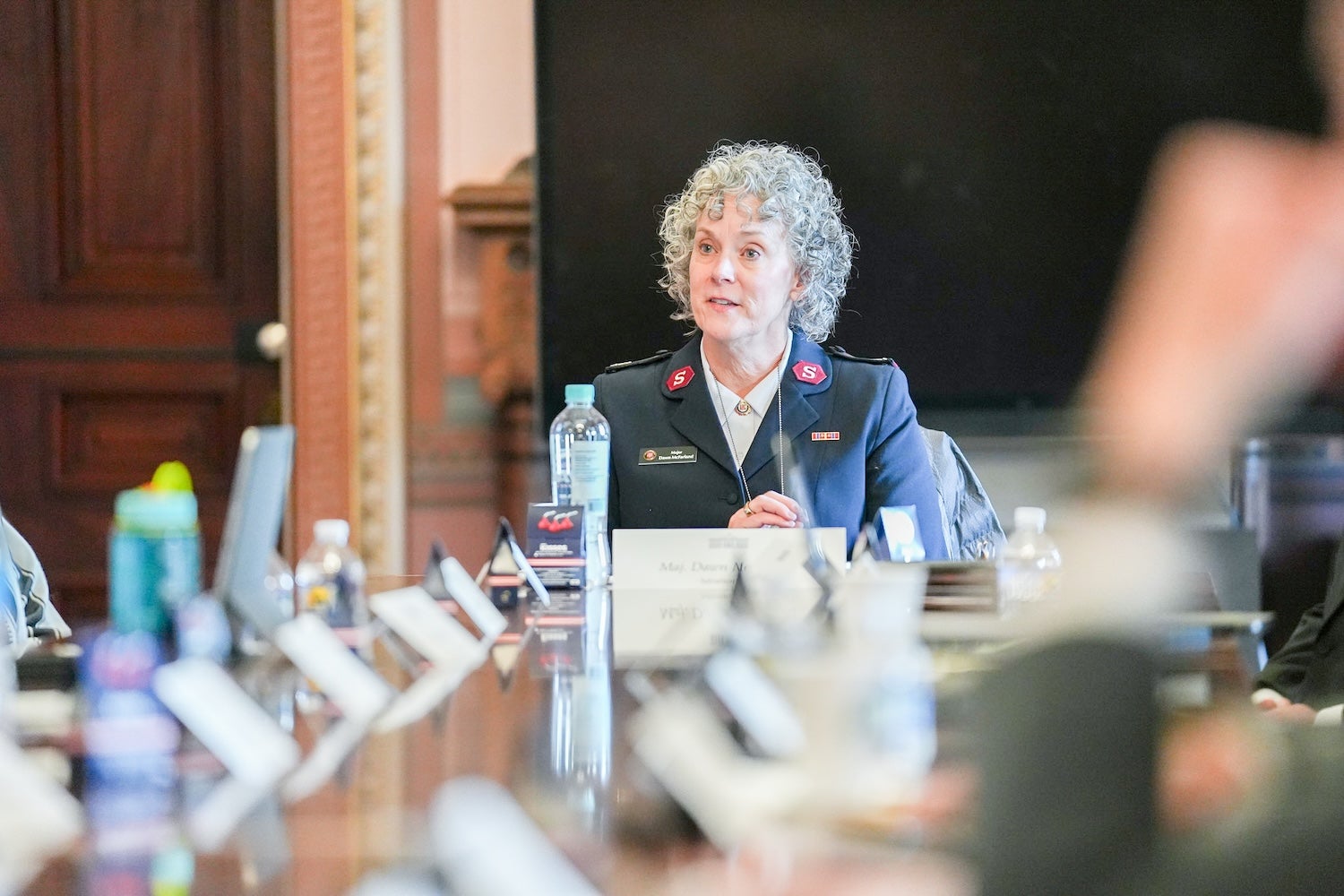
This is where Major Dawn McFarland, administrator of The Salvation Army’s St. Petersburg Adult Rehabilitation Center (ARC) in Florida, became a part of the process. Commissioner Hodder brought Major McFarland into the project due to her years of work in the ARC, along with her education and expertise in rehabilitation and recovery. With her experience leading six different ARCs, her Master of Arts in Integrated Recovery for Co-Occurring Disorders, and as a Licensed Chemical Dependency Counselor (LCDC), Major McFarland is uniquely qualified to speak into this space.
“It’s called the Better Together Research Project,” Major McFarland explains. “The research team worked with Doctor Koenig, who has done a lot of extensive research in faith and how it affects outcomes in geriatric patients, to create an assessment tool.” Dr. Koenig’s studies have shown that religious faith significantly impacts recovery rates, mental well-being, and overall longevity of patients.
The assessment they created together measures seven domains: happiness and life satisfaction, mental and physical health, meaning and purpose, close social relationships, character and virtue, financial and material stability, and religious community and faith. The 15–20-minute survey is voluntarily completed by participants upon admission to a program, midway through, on completion of the program, and six-months post-completion.
The pilot launched in January 2026, and it will be completed in December 2027. “Because of this, and because Citygate and ATC are very active on Capitol Hill, people in helping humans services, HUD, and SAMHSA, are already aware of this tool. As is the Drug Czar’s office, the Office of National Drug Control Policy. They are very curious and are waiting to see what the pilot says,” Major McFarland explains.
But an unexpected outcome has already manifested from her involvement in this research — Major McFarland’s name is becoming known in government circles as a subject matter expert for her work in faith-based recovery.
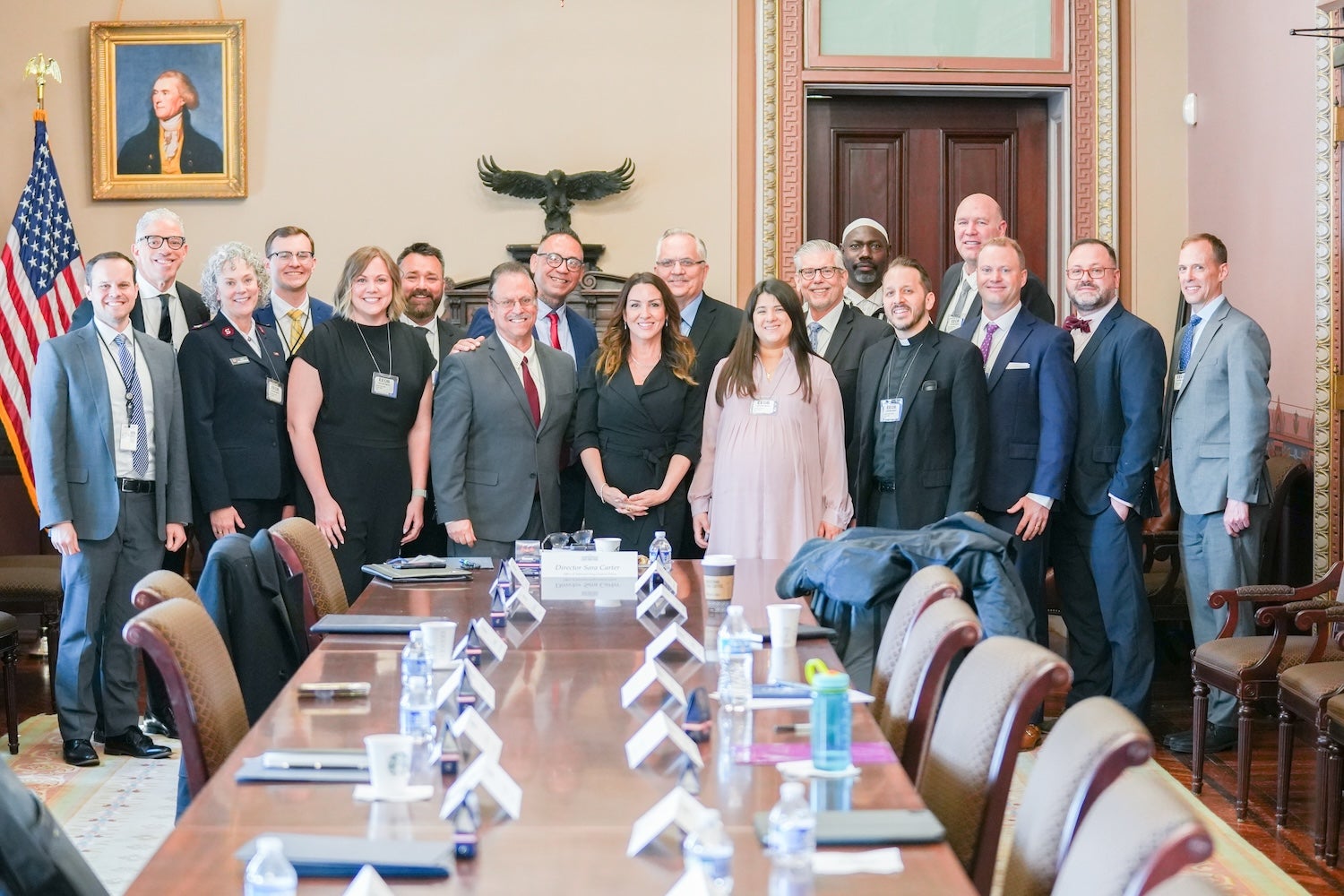
“I got a phone call from one of the research teams from ATC saying, ‘The Drug Czar wants to meet with faith leaders in the field to talk about the intersection between faith and government when it comes to recovery. What are we doing well? What are we completely missing on? How can you help us inform policy?’” Major McFarland was one of about a dozen people who met with Drug Czar Sara Carter and her team in March to talk about what works, what the roadblocks are, and to advise on the government’s future direction. “We talked a lot about prevention needing to begin before fifth grade. I suggested in kindergarten.”
“Opinion, and therefore, policy, is shifting.” Major McFarland shares that the group also discussed the laws surrounding how a fully grantpaid counselor has to refer spiritual questions to a chaplain instead of engaging, because of the enormous current separation of church and state. “The Drug Czar went back to her office and said to her people, ‘Find the federal law that says that.’ And they did. So, you are now going to see over the next several years the inclusion of faith-based recovery programs with legitimacy.”
In April, Major McFarland was invited to present at a best practices summit for treating substance abuse and homelessness, speaking on recovery as a developmental process. Following the presentations and discussions, subject matter experts were asked specific questions, the answers to which were compiled and recently released nationwide as a best practices toolkit.
“What was really awesome were the connections made in the room,” Major McFarland shares. There were government employees, but there were also people like her, working in the trenches to help people experiencing substance abuse issues and homelessness. “In the best practices summit, there were four individuals who gave their story of recovery. Three of them were ARC graduates.” One of those graduates is now a recovery advocate in California, another is part of an intake and outreach team for a faith-based organization in Baltimore, and the third is doing ministry work in the South. “It was just mind-blowing to see alumni who are not just working in an ARC or at this level, but they’re doing what they can on a grander scale to teach the public what recovery is and that it’s possible.”
Major McFarland was invited by SAMHSA and attended another summit this summer called, “Call to Care: Strengthening Faith and Behavioral Health as a Social Infrastructure for Recovery,” with the goal being similar to her previous experience, providing best practice guidance for the Department of Health and Human Services which may, in turn, influence how our government and professionals view the legitimacy of faith as an important element of determining long term recovery capital for individuals with substance use problems.
“This opportunity has been unexpected, and I certainly hope the people who have poured into my life and the people whom I represent have been represented well and with honor,” Major McFarland shares. “I believe it’s important that people know restoration is possible mentally, physically, and spiritually.”