Behind the scenes: How Salvation Army staff identify valuable donations to support rehabilitation
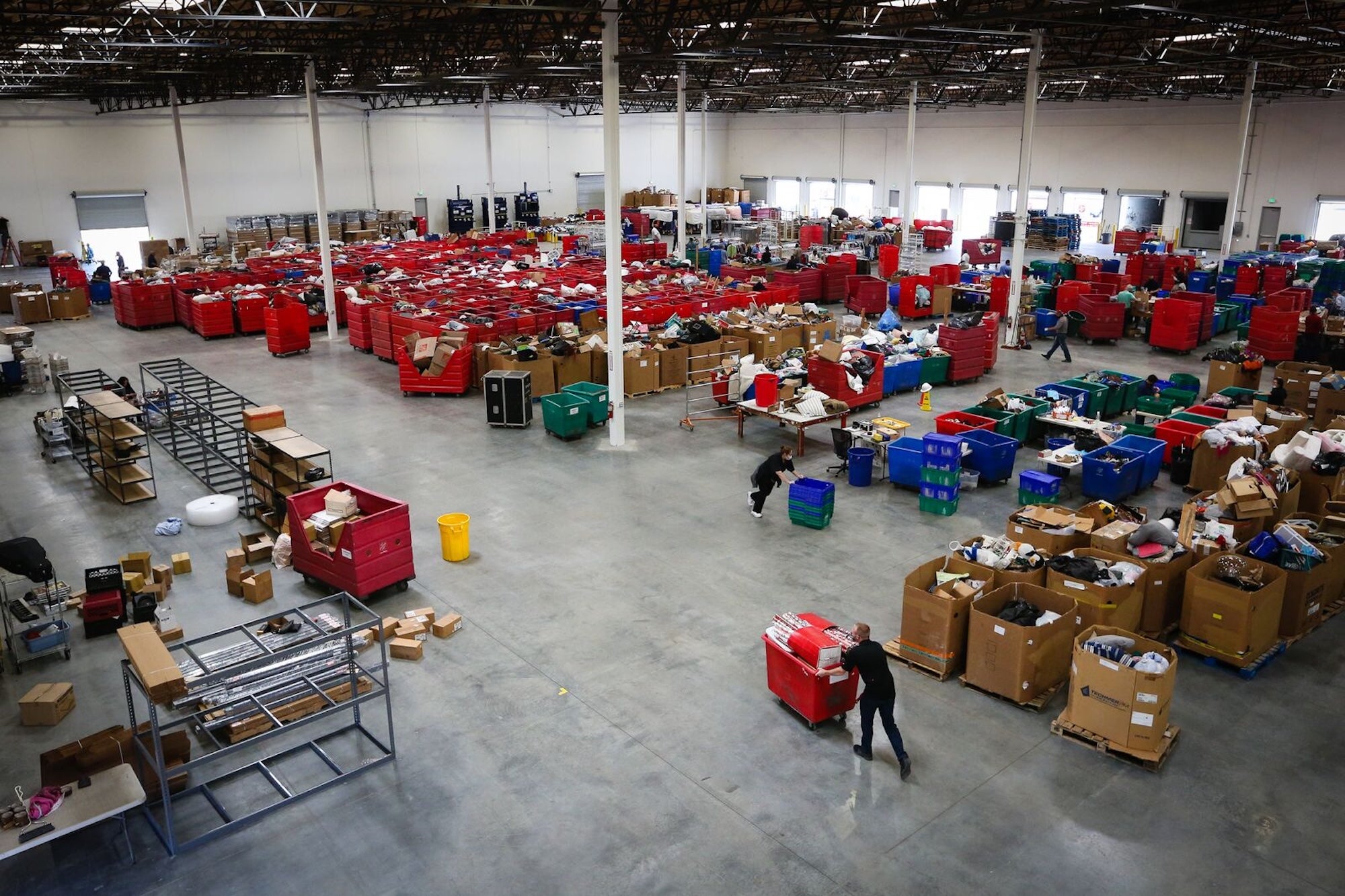
Thousands of donations pass through Salvation Army warehouses each day. Some turn out to be worth far more than expected.
A sterling silver tray arrived at a Salvation Army sorting warehouse in Pasadena, appearing to be another standard donation.
A closer look revealed otherwise.
Crafted in Mexico and weighing more than 3,500 grams, the piece featured ornate handles and intricate detailing. After being listed on The Salvation Army’s e-commerce site, it sold for $8,378.
Each day, thousands of items move through Salvation Army warehouses. Among familiar finds like clothing, shoes and accessories are hidden treasures: rare collectibles, antiques, designer fashion and pieces holding historical significance.
“We see a lot of interesting and surprising stuff coming in,” said Johanna Tenorio, a top-performing e-commerce lister at The Salvation Army’s Anaheim warehouse. “A lot of people don’t realize the value of some items.”
Tenorio has seen a wide range of unique items during her 10 years in Salvation Army e-commerce roles. Identifying potentially high-value items requires research and a trained eye. Finds deemed especially valuable are listed for sale on The Salvation Army’s online thrift store.
Most donations arrive through retail stores, donation centers, estate donations and warehouse operations. Staff then sort through thousands of items, using a guide to look for clues that something may have increased value, including recognizable brands, signatures, unusual materials and quality craftsmanship.
The items are then passed on to e-commerce listers like Tenorio, for further research, authentication and online listing.
“Basically everything that we get, we research,” Tenorio said. “You have to figure out what it is, where it came from and if it’s something people are looking for.”
Research often involves comparing similar items that have sold online, searching for maker’s marks and serial numbers, and using image-recognition tools such as Google Lens to identify unfamiliar pieces and determine their potential value.
The combination of experience, research and authentication has led to some remarkable discoveries.
Through her listings, Tenorio generates an average of about $7,400 in sales each week, helping fund The Salvation Army’s Adult Rehabilitation Centers (ARCs), rehabilitation programs for those rebuilding their lives.
She said the variety of items is what keeps the work interesting.
“It’s a lot of fun learning about new items and discovering things you’ve never seen before,” Tenorio said. “Every day brings something new.”
Notable finds
From antiques and collectibles to artwork and designer goods, the finds below highlight the variety of valuable donations discovered at Salvation Army warehouses across the Western Territory.
Gold Buddha Perfume Bottle
Crafted by Van Cleef & Arpels New York, this 14K gold Buddha-shaped perfume bottle pendant features gemstone accents and a hidden perfume applicator. The rare collectible sold for $4,999.99 after attracting 225 bids.
South Africa Krugerrand Fine Gold Coin
Containing 1 ounce of fine gold, a highly sought-after 2012 Krugerrand sold for $5,176.
Assorted Camera Collection
This mixed lot included more than 25 digital and Polaroid cameras sold as-is for collecting, repair and refurbishment. The collection sold for $510.
Vintage Muhammad Ali Boxling Glove
Signed by Muhammad Ali with an inscription reading “Serve God, He is the GOAL,” this vintage Everlast boxing glove appealed to sports memorabilia collectors and sold for $395.
Bottega Veneta Parachute Intrecciato Leather Shoulder Bag
Featuring Bottega Veneta’s signature woven craftsmanship, the luxury shoulder bag showed little wear and sold for $2,581.
Hidden value
While valuable donations come from a variety of categories, ARCC Director of Business Piers Fairclough said demand can be unpredictable, with certain items suddenly becoming highly sought after by online buyers.
“There’s always some type of niche that’s going on, or some new trend,” Fairclough said. “Right now, it’s digital cameras. Point-and-shoot models have become especially popular, and social media platforms like TikTok spark interest.”
Understanding buyer demand and trends helps staff recognize items that may otherwise be overlooked.
Fairclough added that prized items often arrive alongside everyday household goods, and some donors may not realize what they are giving away. Others intentionally contribute high-value items to help support the work of the ARCs.
ARCC Director of E-commerce Scott Cha recalled one of the most expensive donations ever sold: a Jaeger-LeCoultre Reverso 18K gold watch. It garnered more than $15,000 in 2020.
“Sometimes the items that end up generating the most interest are the ones we least expect,” Cha said.
One of the most surprising discoveries, Cha said, was a 1840s Native American beaded bag, which sold for $5,025.
“Those surprising, almost shocking items get our e-commerce staff excited because they often have a story behind them that they get to uncover,” he said.
Looking ahead, Cha said e-commerce operations have plans to expand as staff test and introduce new research and identification tools, improving efficiency and increasing the volume of items listed.
“It motivates me to know these donations are helping support the ARCs while also finding new homes with people who appreciate them,” Tenorio said.