25 Years After 9/11: We Remember
By Brad Rowland /
Never forget.
In the days, months, and years after the attacks of September 11, 2001, that two-word phrase became a shorthand reminder to those who lived through a time of great uncertainty, challenge, anguish, and loss. Now, 25 years later, approximately 100 million Americans are thought to be too young to have any tangible memory of the day, putting even greater emphasis on the “never forget” mantra to help those that witnessed its events pass along their significance and legacy to those who did not.
On that tragic day, nearly 3,000 people lost their lives, with countless more suffering long-lasting physical injury and emotional turmoil. However, September 11, 2001, also stands as a reminder of the innate goodness of humankind, with stories of true bravery, the ability for people to come together, and the power of the collective memory to inform the future.
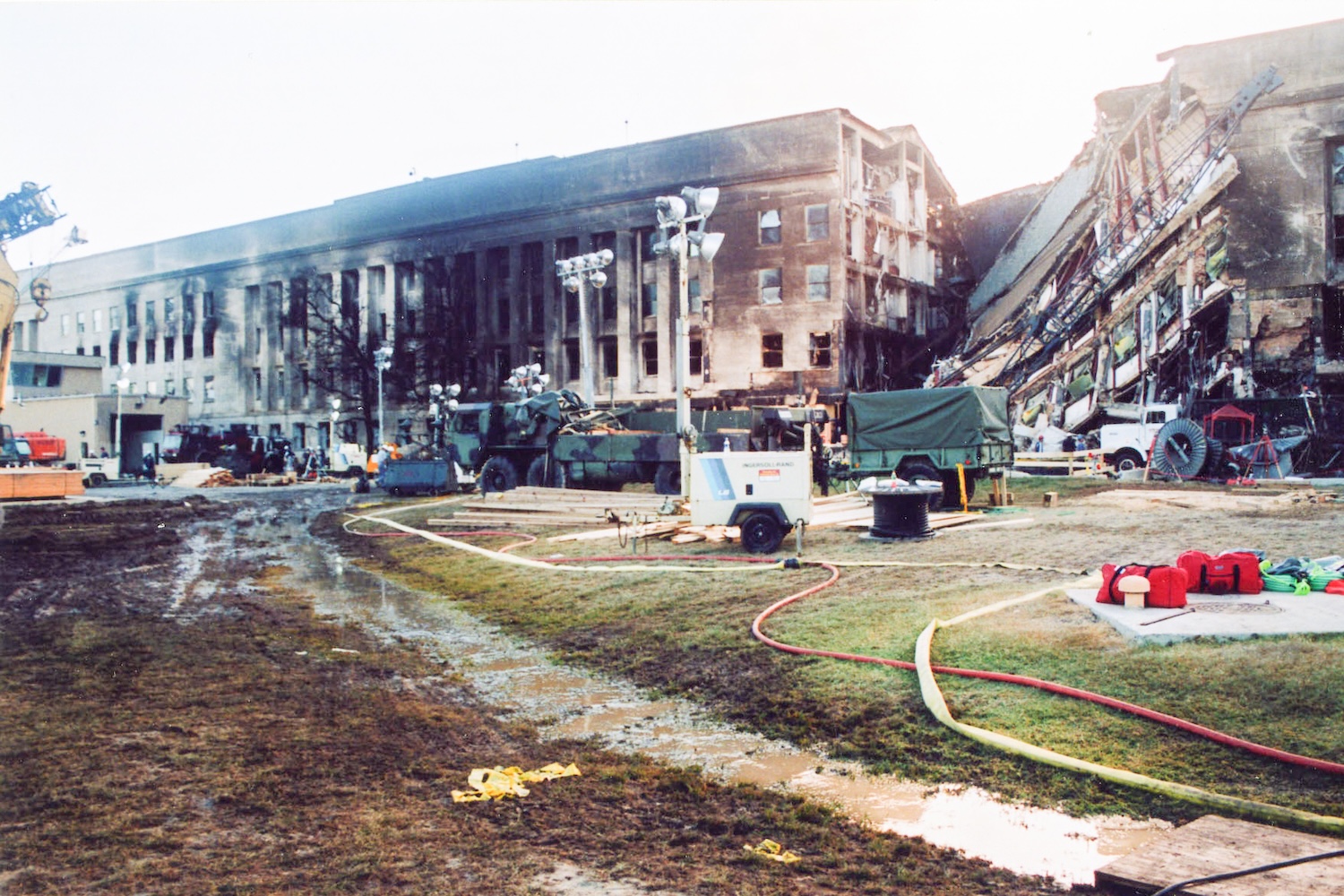
The Salvation Army was one of the first emergency disaster relief organizations on site in New York after planes struck the two towers of the World Trade Center. In fact, The Salvation Army arrived at what was quickly known as Ground Zero less than one hour after the first airplane strike. As the day unfolded, The Salvation Army also responded quickly near Shanksville, Pennsylvania after the crash of United Flight 93 and at the Pentagon after the crash of American Airlines Flight 77 in Arlington, Virginia.
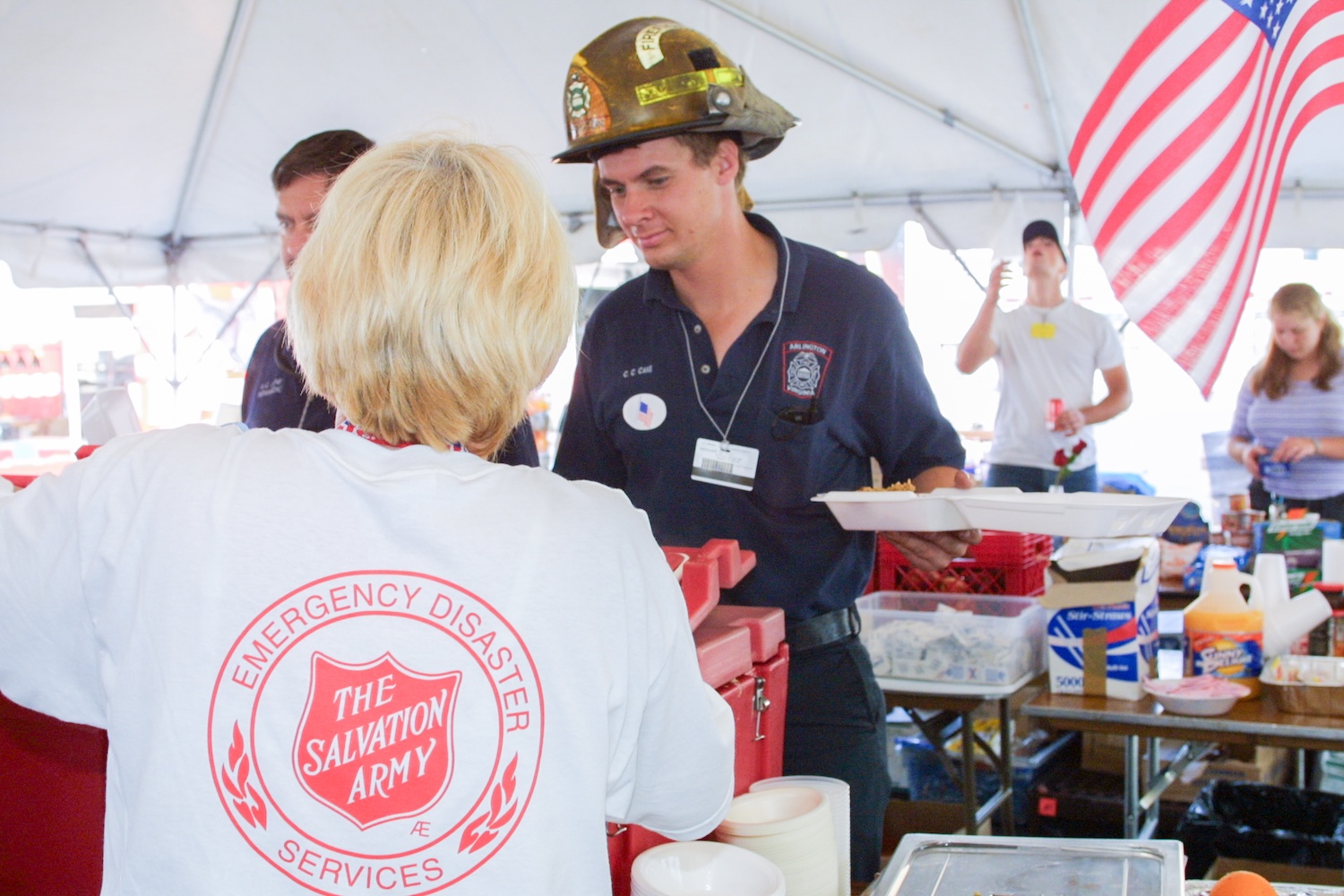
All told, more than 39,000 Salvation Army officers, volunteers, and staff served more than three million meals in the months that followed. Beyond meeting physical needs, Salvation Army personnel provided emotional and spiritual care counseling and support to thousands of rescue and recovery personnel, as well as impacted families and other first responders. Approximately $90 million was donated by the public over the course of the months-long response, empowering The Salvation Army to compassionately serve in His name without discrimination.
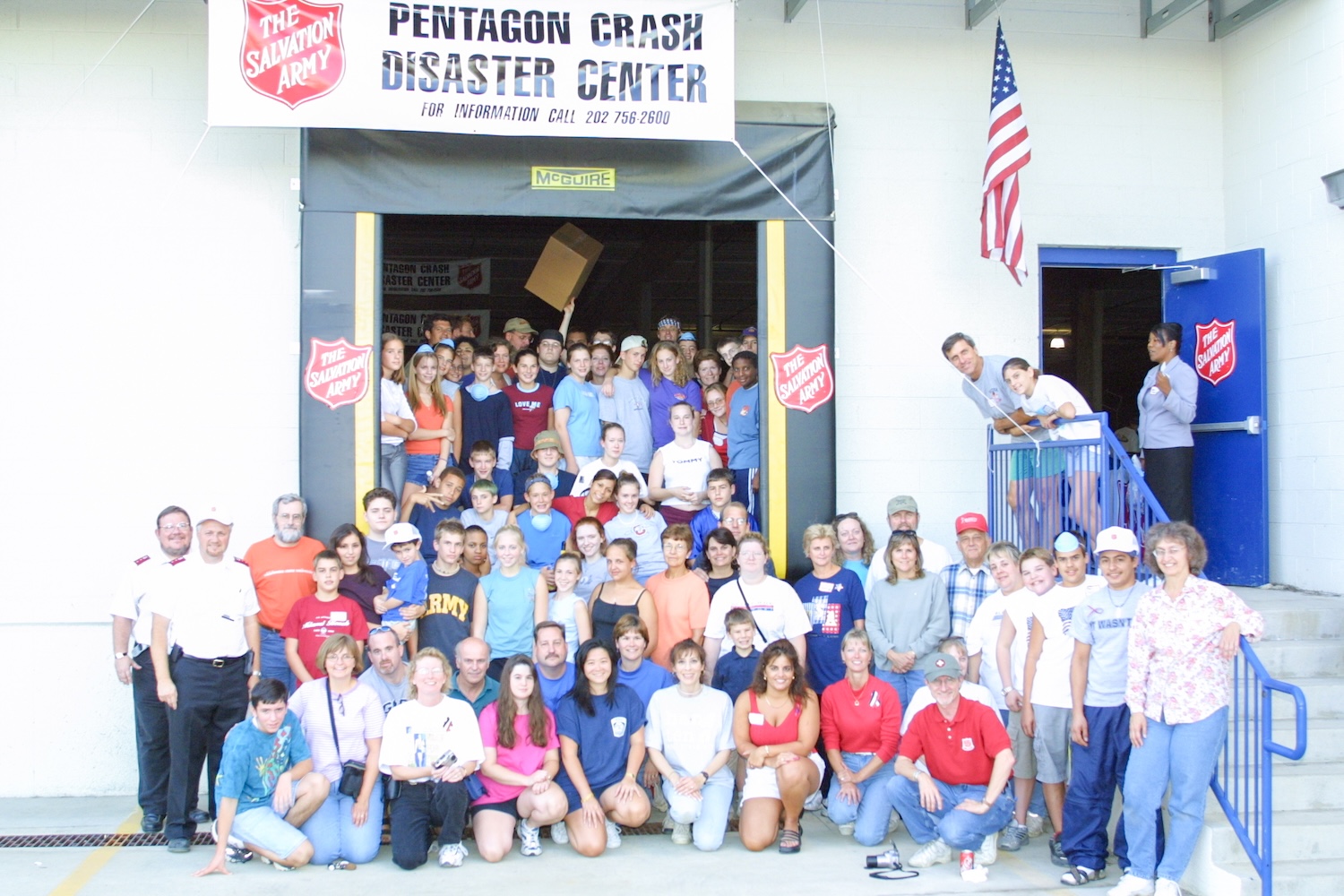
While many naturally associate The Salvation Army’s response heavily with Ground Zero and what became an eight-month effort called “Operation: Compassion Under Fire,” the USA Southern Territory’s central response effort took place at the Pentagon. With more than 7,000 officers and staff serving in New York, many from the Southern Territory were deployed to the region, but the Pentagon response was led by what was then the National Capital & Virginia (NCV) Division.
Captain Melvin Welch, then of the Montgomery County (Maryland) Corps, played a vital role in The Salvation Army’s initial response at the Pentagon, though it may seem simple in retrospect.
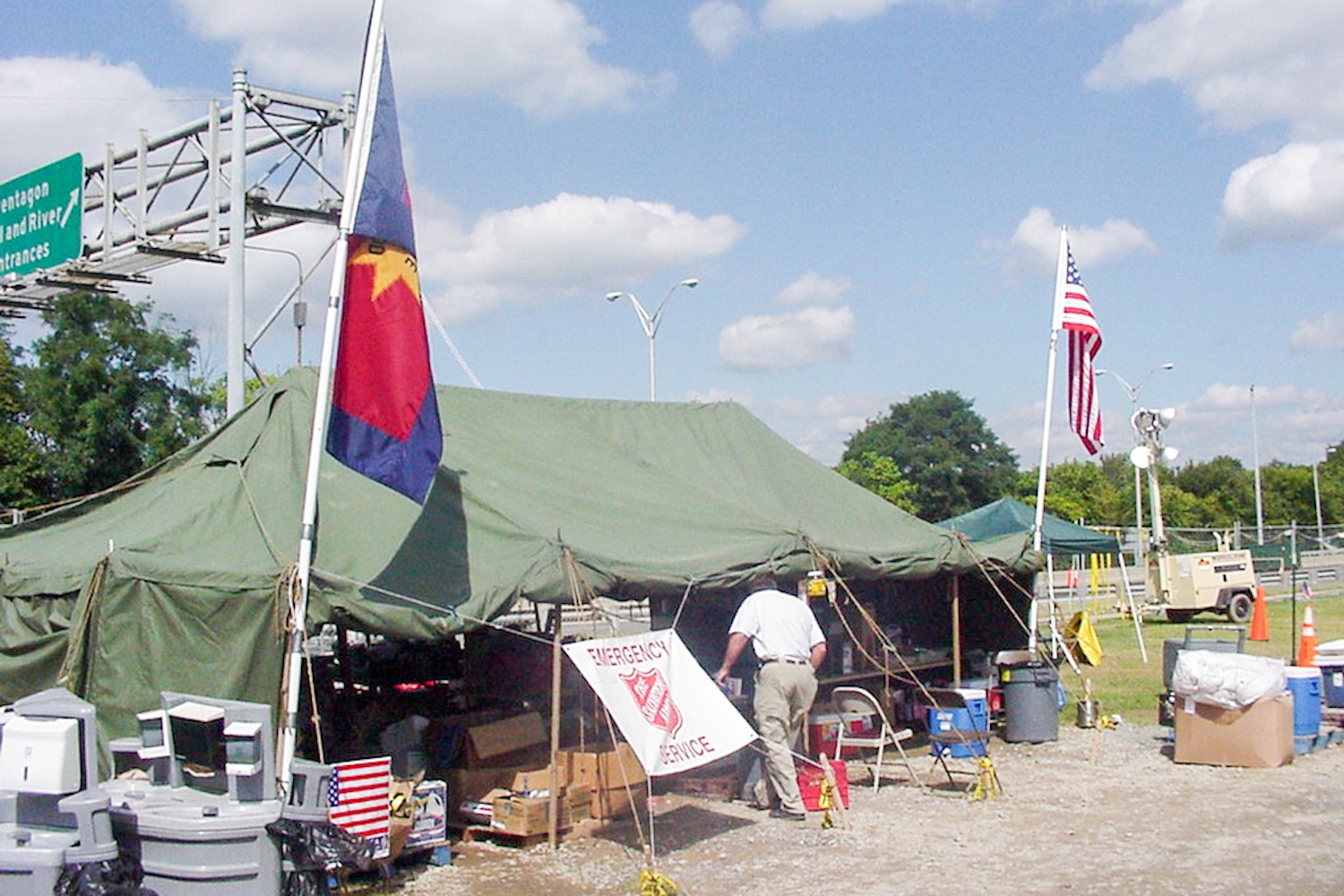
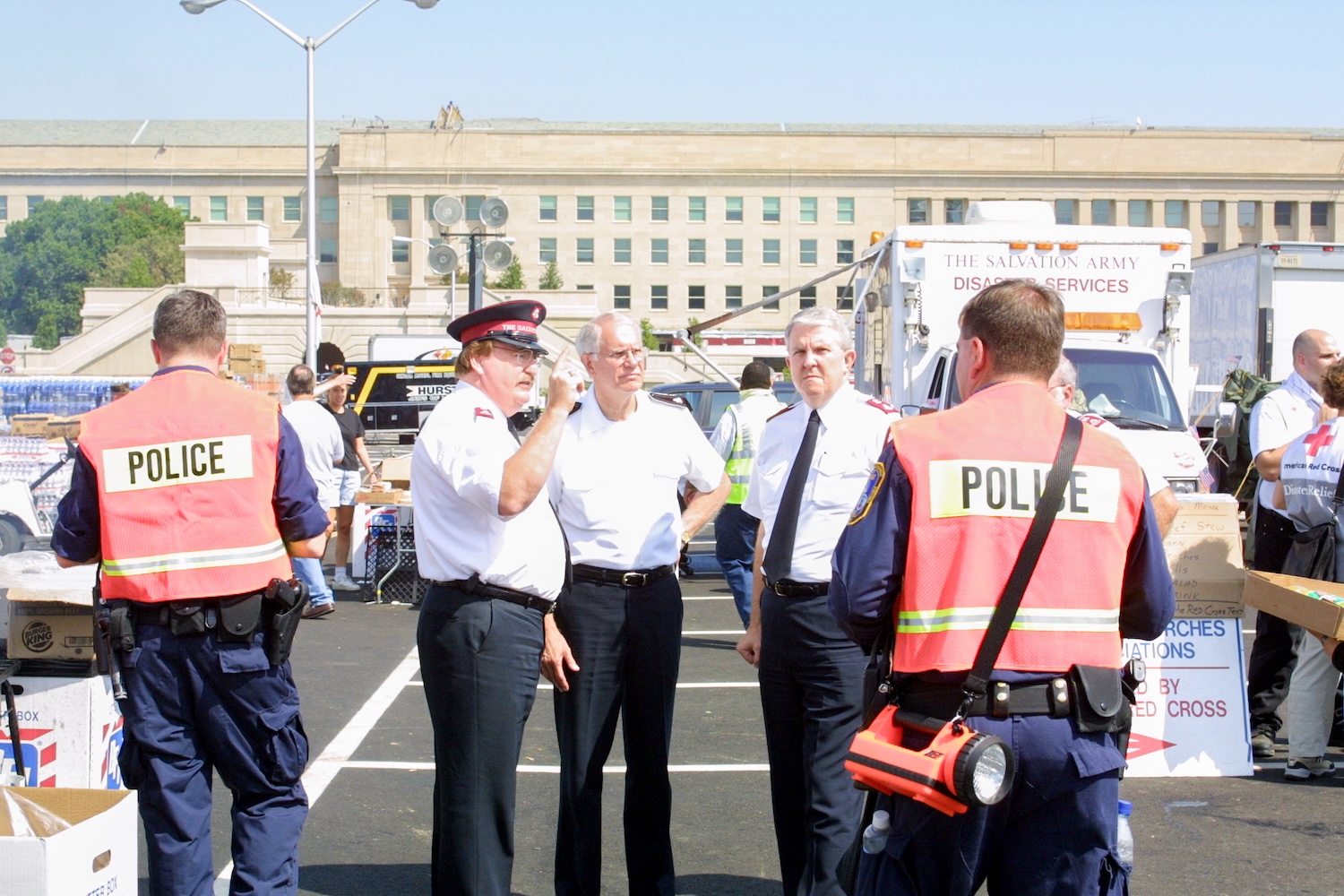
“When we got down to the Pentagon, Salvation Army officer Melvin Welch already had his canteen sitting on the lawn of the south side of that building, which eventually is where the fence went up,” recalls Bernie Dake, territorial communications director and a first responder for The Salvation Army at the Pentagon.
“We had to be within a hundred feet of the building,” says Lt. Colonel William Crabson, the then divisional commander of the NCV Division. “And there was the wherewithal to take the keys away from the canteen so that it couldn’t be moved. That firmly set up and established our presence.”
Lt. Colonel Crabson officially led the response effort in the region, but Major Todd Smith, NCV’s general secretary at the time, was, as described by Lt. Colonel Crabson, the “eyes and ears of the operation.” In addition, Major Gene Hogg, then the area commander in Norfolk, Virginia, was tasked as the site commander as well as the liaison with United States government officials and other non-profit agencies.
Dake, who was in between career opportunities in September 2001, was in the region and received a call from Major Smith that held what at first seemed like a simple question: “What are you doing right now?” Not yet aware of what had taken place, Dake was slightly confused when Major Smith told him, “I need you to turn your truck around and go pick up as much water as you can at BJ’s on Little River Turnpike and meet me at the corps.” Dake says he replied, “‘What? Why?’ He said, ‘A plane just hit the Pentagon’… There was just a resolute feeling that The Salvation Army is going to serve.”
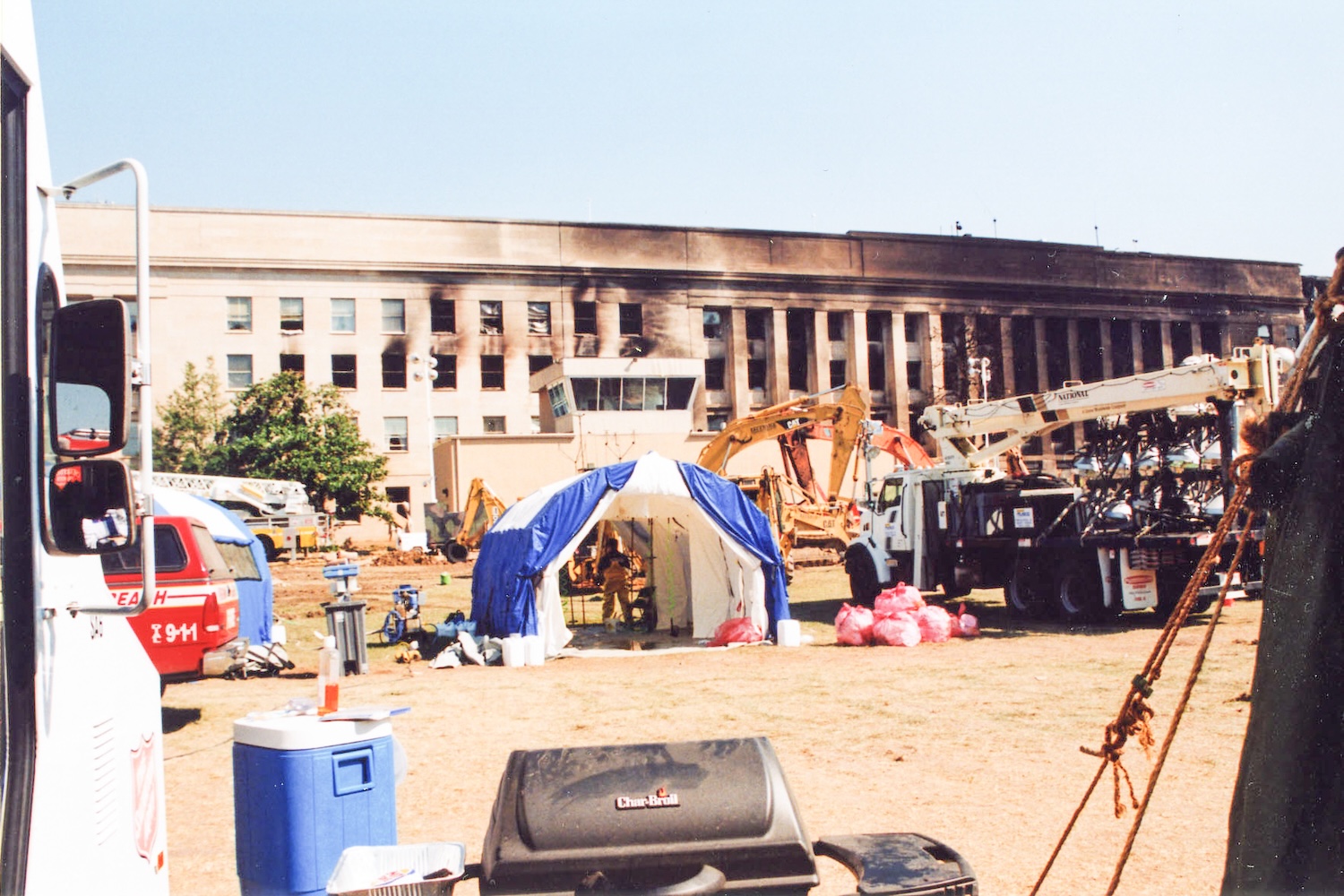
In the coming days, The Salvation Army would feed at five distinct locations near the Pentagon, including at an area organized by the U.S. Department of Defense for impacted families. The Salvation Army’s major (and officially appointed) roles were broadly twofold. One was to set up what was colloquially known as “Camp Unity,” which was a support area for nearly 7,000 volunteer responders and military personnel. The second was being responsible for all food preparation at the Pentagon, which meant being able to serve nearly 7,000 people for each meal.
Major Hogg had previous disaster experience responding to the tragic Oklahoma City bombing, helping to make him what Lt. Colonel Crabson describes as “the perfect person” to coordinate the effort.
“He knew something on this scale,” Lt. Colonel Crabson says. “Gene knew exactly what to do. He was unrelenting in care for the people and really establishing a presence for the Army.” With protocols changing on a daily, or even hourly, basis, Major Hogg was charged with navigating difficult terrain, particularly among government agencies and other non-profit responders.
Beyond the coordination and food preparation, The Salvation Army offered immediate emotional and spiritual care to those who had been inside the Pentagon at the time of the attack, as well as for those who were searching through the rubble and families seeking answers and comfort. Salvation Army support teams also offered practical support including changes of clothes for rescue and recovery workers, as well as prepaid phone cards for military personnel and workers needing to contact loved ones.
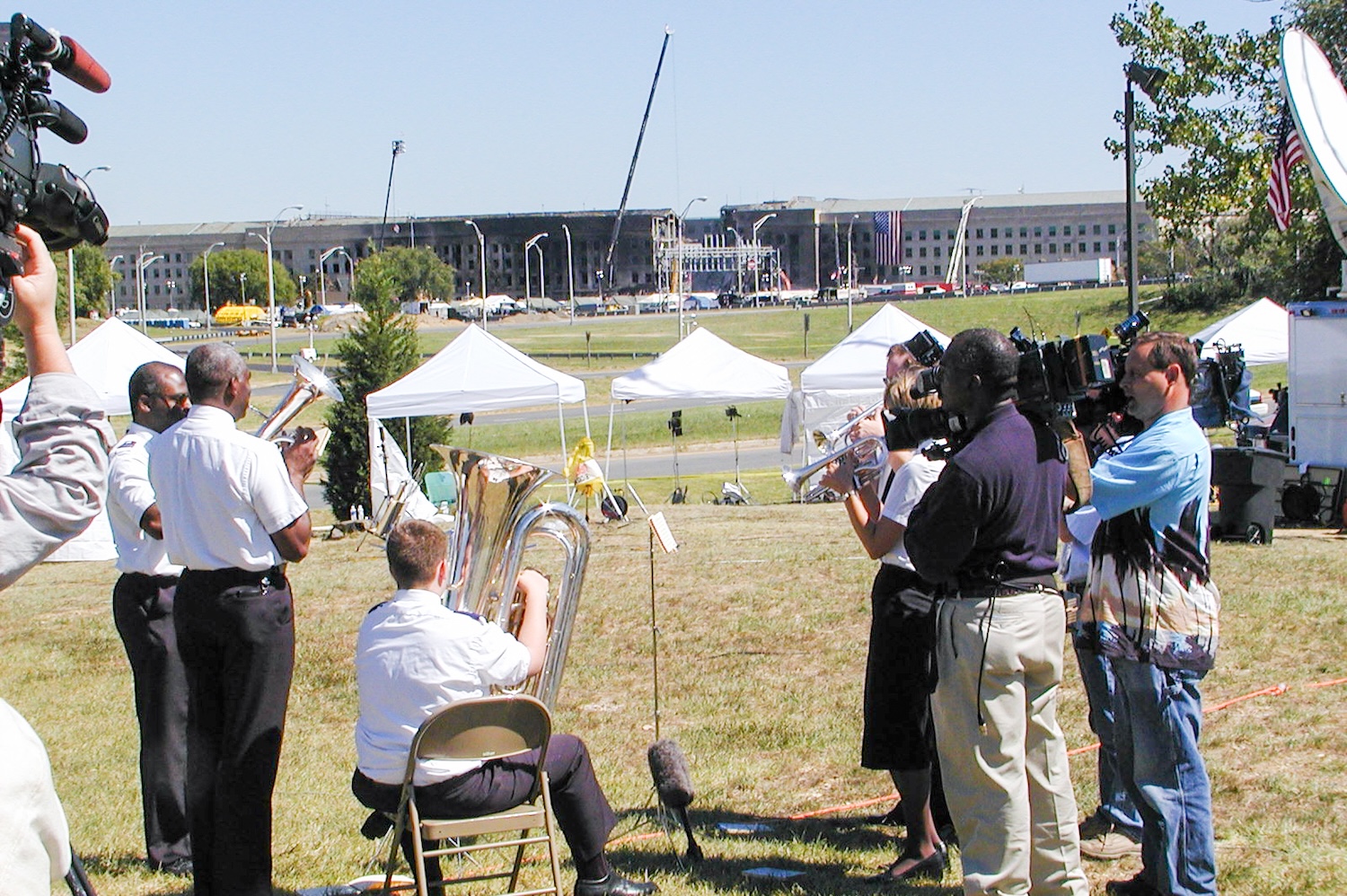
“I also remember two religious services on the Pentagon site that first Sunday with a central tent as the backdrop,” Lt. Colonel Crabson recalls. “One was a Roman Catholic service, and the other was The Salvation Army. I was privileged to speak that morning, and the Arlington Corps Band provided music and served in various capacities.”
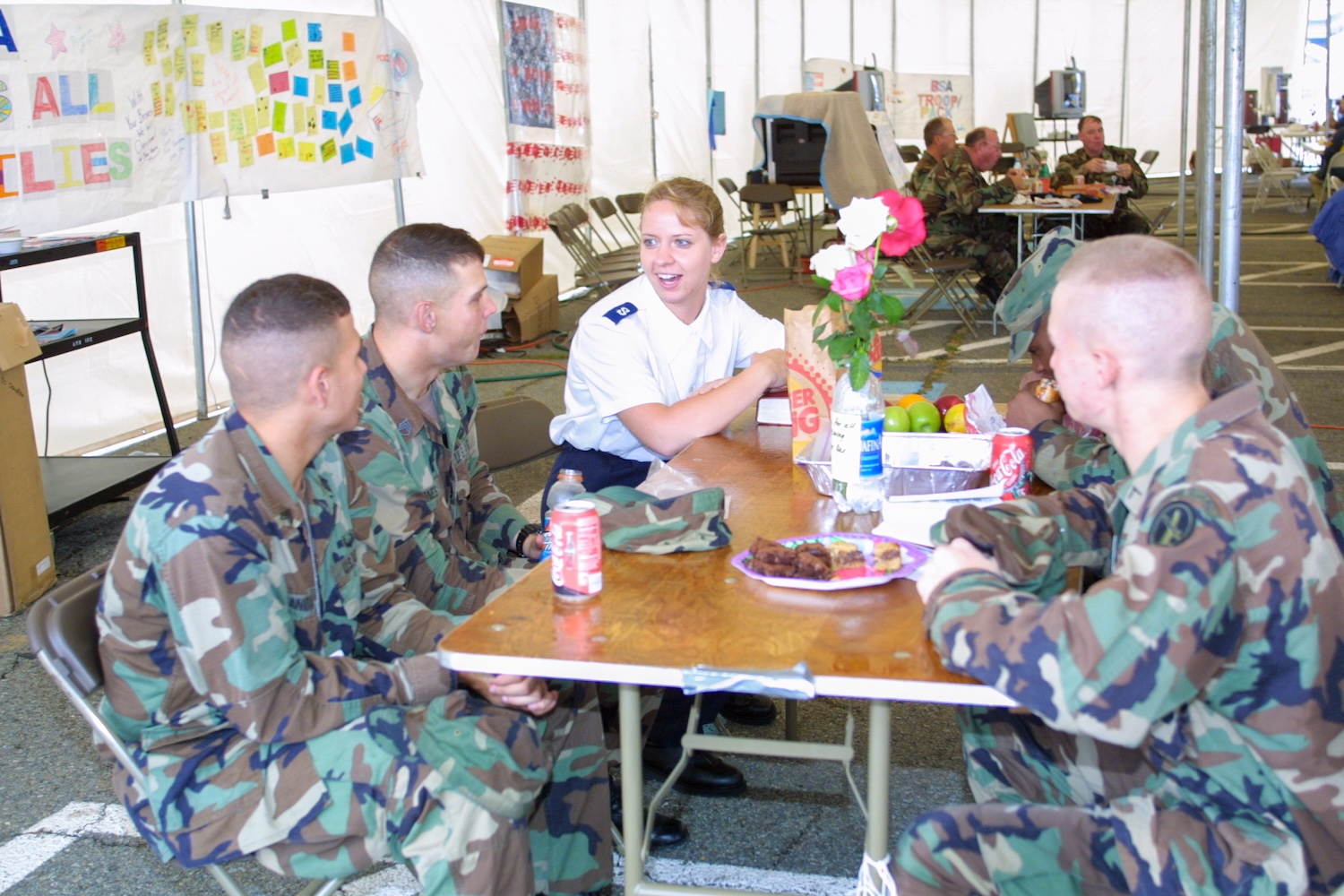
Away from the Pentagon site, the Arlington, Virginia Corps became what Lt. Colonel Crabson describes as the “nerve center” for the Army. Salvation Army units were permitted to be open around the Washington, D.C. area, despite mandated closures, and many staging efforts and logistical operations centered on the nearby corps. As part of the fallout, occupancy in local hotels dropped to five percent or lower, leaving many local citizens indirectly affected with a drop in available work.
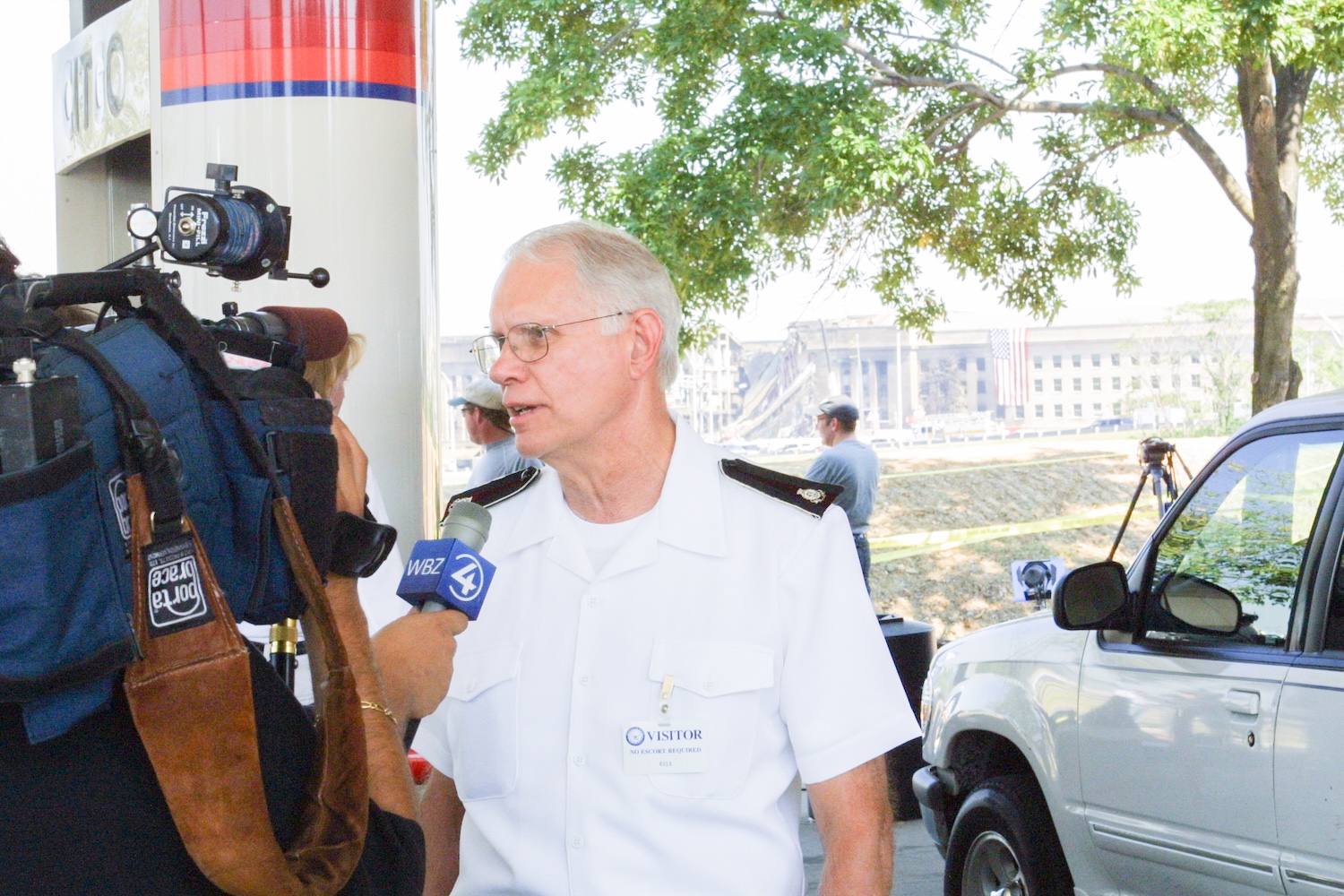
“I went on television with a local affiliate and just made an announcement that for everyone in the hospitality industry and others indirectly affected, we were also here to help,” Lt. Colonel Crabson says. “My staff was going crazy toward me, but they made it all happen.”
Within just days of the initial response, meetings were underway with plans for 12–24-month service that included case management. The Salvation Army assisted more than 17,000 survivors and their families around the Pentagon, including many through long-term recovery.
Work continued in Virginia, New York, and Pennsylvania, but The Salvation Army, including various units from the Southern Territory, also sprang into action elsewhere. Airports across the nation were shut down for days, meaning a heavy focus was on the NCV Division to mobilize resources at the Pentagon. They were soon flanked by the Maryland-West Virginia Division and representatives from the Eastern Territory, but other Salvation Army units supported other options. That included the deployment of a 53-foot field kitchen from the Florida Division to serve at Ground Zero.
“One thing that people forget about The Salvation Army is that, yes, we served in New York. But we served in Washington. We served in Pennsylvania. We also served in places like Canada,” says Jeff Jellets, territorial emergency disaster services director. “There were hundreds of flights that were diverted, and everything was grounded. So, wherever people were stranded, The Salvation Army was stepping up to serve those folks who couldn’t get home.”
The Salvation Army’s service in Canada was later immortalized in a musical production titled, “Come from Away.” After the terrorist attacks, 38 planes were suddenly diverted to the small town of Gander, Newfoundland, with more than 6,000 stranded passengers in immediate need of care, support, and shelter. The Salvation Army stepped in to help fill that void, offering food, supplies, compassion, and spiritual care.
Memories and stories from the response effort indelibly reverberate through any individual who served alongside brothers and sisters from The Salvation Army and other responding agencies. “I realized in the moment that’s the part of the ministry I want to be involved in,” Dake says. “Meeting human needs. That is our mission statement, and we do it in the name of Jesus unapologetically.”
“I think we learned so much from the response,” notes Jellets. “The trust in the shield of The Salvation Army has been built up over generations, and it’s something that we should never take for granted. We have to protect it, because it does allow us entry. It opens doors.”
“If you served at any of these sites,” Jellets continues, “you did not leave the same person that you were before the events of September 11.”
In the days that followed, The Salvation Army received a great deal of recognition for its efforts, though that is never what inspires officers, soldiers, adherents, and volunteers to act. “We’re doing it because we’re compelled to do it,” Dake says. “God’s love compels us to do this work. And what a privilege to serve as part of an organization like that.”
Lt. Colonel Crabson shares that the “responsiveness of the Army” is still among the biggest standouts in his mind 25 years later. “Our officers knew almost intuitively what to do,” he says. “Their eagerness, their willingness, the hours they put in, the sensitivity to people… I was endlessly proud of the officers and all the men and women who helped to navigate it all. They set everything aside and gave themselves over with compassion to the work. It was very, very impressive.”
The September 11 response remains The Salvation Army’s largest mobilization of services in the United States, and on its 25th anniversary, it is ever more important to remember what transpired. Part of that memory is assigned to those who were lost, those who were served, and those who were serving. Another part, however, should be assigned to ensure that those in the present and future “never forget” the impact.
“On the morning of September 11, The Salvation Army was on the scene in New York before the clouds of dust even settled, meeting very practical needs,” Commissioner John Busby, the then National Commander, wrote shortly after the emergency response came to its initial conclusion. “Water for the thirsty. Food for the hungry. Rest and encouragement for those weary on the front lines of America’s recovery. What was done in New York was done as well at the Pentagon, in the hills of western Pennsylvania, and for stranded travelers across the land. It is done every day in the lives of uncounted people throughout society. Meeting the needs of the hungry and the hurting is central to our mission. It is what we do, because of who we are, because of Whom we serve.”