Food Pantries and Hunger Relief
Hunger Relief Across America
The Salvation Army provides comprehensive hunger relief across the United States, serving people facing food insecurity through neighborhood pantries, mobile food distributions, community kitchens, home delivery, disaster feeding, and SNAP enrollment assistance.
Hunger manifests differently in every community: sudden crises following job loss or disaster, limited grocery access in rural areas, and families working full-time yet struggling to afford enough food. In 2024, 13.7% of U.S. households—about 18.3 million households—struggled at some point to afford enough food according to the USDA.
If you or your family need food assistance, use the food pantry locator above to find help near you. Services are free and open to people in need.
As a Christian organization, we are motivated by the belief that every person has God-given dignity and deserves care—extended to everyone in need, regardless of background, belief, income, or circumstance.
Why The Salvation Army's Hunger Relief Model Works
The Salvation Army's hunger relief model works because it combines national scale with local, dignified service. We help people facing hunger through food pantries, mobile food distributions, community kitchens, disaster feeding programs, and benefits assistance.
The Salvation Army also responds locally with programs designed around each community's specific needs, often connecting immediate food assistance with housing support, utility assistance, SNAP enrollment, disaster recovery resources, and other services that support long-term stability.
Our approach reaches people in different ways while combining food assistance with other practical support, such as housing help, utilities, case management, and SNAP enrollment, to move them toward stability.
This model depends in large part on the generosity of donors, volunteers, and community partners. You can support hunger relief by making a financial donation, volunteering your time, or partnering with us as an organization.
How We Serve
Immediate Food Access
Neighborhood Food Pantries
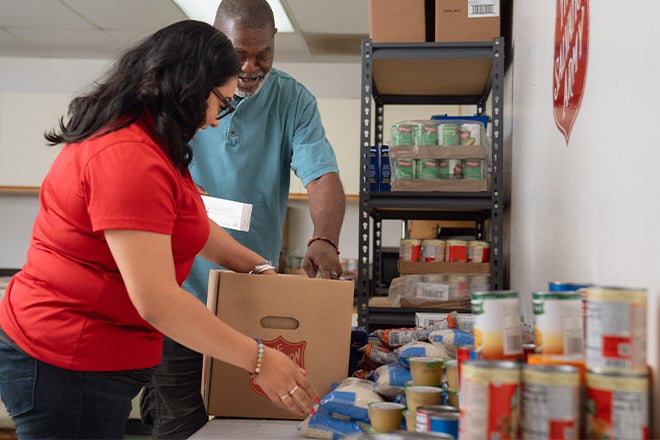
A food pantry provides free groceries directly to individuals and families. Salvation Army food pantries typically provide a three-to-five-day supply based on household size and local availability.
Common items include canned goods, pasta, rice, cereal, peanut butter, canned meats and protein sources, shelf-stable dairy, bread, grains, fruits, vegetables, and at select locations, diapers and hygiene items.
Client-Choice Food Pantries
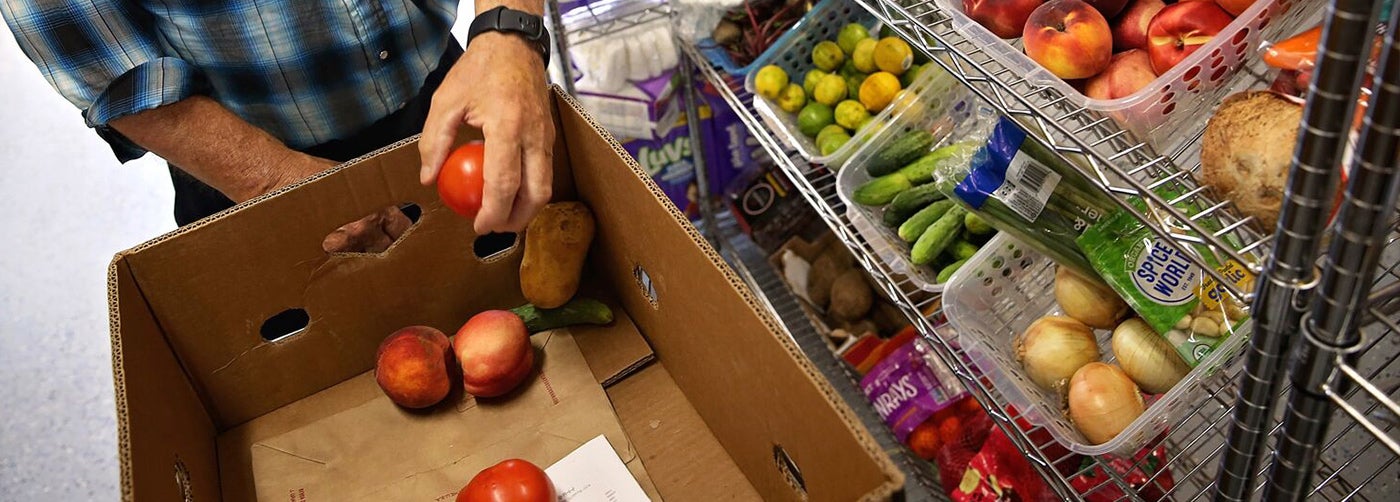
Some locations use a client-choice model where clients select groceries rather than receiving pre-packed boxes. This approach works like a small grocery store, reducing food waste, giving families control over their selections, and better supporting dietary needs—vegetarian, low-sodium, halal, kosher, or culturally familiar foods when available.
Our model reflects The Salvation Army's Christian mission to serve with dignity, without requiring faith participation or spiritual conditions.
Food Parcels and Home Delivery
For people unable to travel to a pantry, some locations offer pre-assembled food parcels, curbside pickup, or home delivery. Food parcels include shelf-stable items and may include fresh produce when available. Home delivery is available for seniors, people with disabilities, and homebound clients at select locations.
Mobile Food Pantries
Mobile food pantries bring groceries to communities with limited access to fixed locations, serving food deserts, rural areas, disaster zones, and neighborhoods where transportation is a barrier. Distributions may be held at churches, community centers, parking lots, or other accessible locations, offered as drive-through, walk-up, or both. At some events, Salvation Army caseworkers are available to connect people with SNAP enrollment, utility assistance, case management, and other local services.
Community Kitchens and Hot Meal Programs
Community kitchens provide hot, ready-to-eat meals for people who need food right away, supporting those experiencing homelessness, food insecurity, social isolation, or immediate crisis. Many locations also operate mobile meal routes delivering hot meals to seniors, people with disabilities, and others unable to travel to dining sites.
Emergency Response
Disaster Relief and Emergency Feeding
When disasters strike, The Salvation Army provides emergency food, water, and support to affected communities through mobile feeding units (canteens) that prepare and distribute hot meals directly in disaster zones. Emergency feeding includes hot meals, snacks, bottled water, food support for survivors and first responders, pantry distributions during recovery, food parcels for rebuilding families, and help applying for Disaster SNAP when available.
Long-Term Stability
Nutrition Education Programs for Children and Seniors
At select locations, The Salvation Army offers nutrition education including cooking classes, healthy meal planning, food budgeting, and age-specific workshops. For children, programs build healthy habits early. For seniors, they support wellness, independence, and better meal choices on fixed incomes. Availability varies by location.
SNAP Enrollment Assistance
Trained staff help people understand SNAP eligibility and navigate application processes, including eligibility questions, required documents, applications, state agency interviews, and referrals to related programs such as WIC, Medicaid, or utility assistance. Many households use both SNAP and food pantries because benefits may not cover a full month of food needs.
Community Gardens
In some locations, The Salvation Army supports community gardens that provide fresh produce, nutrition education, and growing opportunities for families, children, seniors, and neighbors. Some gardens supply produce for local food pantries or meal programs; others serve as educational spaces where participants learn gardening, healthy eating, and community service.
Food Pantry FAQs
Our Food Pantry Services
At The Salvation Army, we know that one of the first results to occur in times of crisis is food insecurity. We are is dedicated to eliminating food insecurity by serving anyone in need. By providing hunger relief programs and services, The Salvation Army is committed to accommodating all those in need without unlawful discrimination or harassment based on age, race, color, religion, sex, national origin, marital status, disability, citizenship, sexual orientation, gender identity, gender expression, or any other characteristic in accordance with our capacity to help. Depending on the location, there may be certain eligibility requirements to receive assistance. Please contact your local Salvation Army to learn more.
Stats
Help feed your neighbors in need.
Donating cash or nonperishable food items to a food pantry is vital in ensuring that individuals and families facing hunger have access to the resources they need to thrive, especially during times of crisis.
Other Services